What is Neobank Crypto? Future Payment Concepts in the Digital World
In the modern financial world, neobank emerges as a digital solution that simplifies various financial services through one unified platform.
As the crypto world evolves, the concept of a crypto neobank or blockchain-based digital bank is gaining attention, especially for its ability to integrate crypto wallets, stablecoin payments, and debit/credit card features.
What is Neobank?
Neobank is a digital bank that operates entirely online with no physical branches. They provide basic financial services such as savings, payments and transfers. Neobank provides the advantages of technology integration and a fast, efficient and flexible user experience.
A crypto neobank is a more sophisticated version of a traditional neobank as it combines conventional financial services with blockchain capabilities, such as:
- Storing crypto.
- Accessing yield from DeFi.
- Provides crypto payment cards (Visa/MasterCard).
- Supports stablecoins and asset tokenization.
- Bridging between fiat and digital assets.
Difference between crypto Neobank vs Traditional Bank
Although similar at first glance, there are a number of fundamental differences between crypto neobanks and traditional banks. The following table summarizes the key differences between the two:
| Aspects | Neobank Crypto | Traditional Bank |
|---|---|---|
| Main Products | Digital bank app with integrated crypto features | Full bank account (savings, loan, etc) |
| Features | IBAN/ACH, transfer, pay bills, savings, debit card | Branch, check, loan, wealth management |
| License | Through licensed banks and fiat payment networks | Have bank license, run own system |
| Fund Protection | Depends on the service provider’s project | Legally insured |
| KYC & AML | Most are KYC mandatory. | Full KYC/CIP, transaction monitoring |
| Funds Deposited as | Directly in the wallet as most are non-custodial | Fiat in the bank |
| Cost | Typically low; spreads on crypto transactions | Admin fees, taxes, and other service fees. |
| Suitable For | Day-to-day transactions and global purchases | Savings, transactions, business services |
5 Most Popular Crypto Neobank Projects
With the widespread adoption of Web3, a number of projects are starting to fill the gap between traditional finance and crypto. One of the rising segments is neobank crypto a digital financial service that integrates banking features with crypto assets.
Here are five of the most popular neobank projects that are currently stealing the spotlight.
1. Ether.fi: All-in-One Neobank
Originally known as a liquid staking protocol, Ether.fi has transformed into one of the most ambitious crypto neobank pioneers. Its evolution positions the platform as a Web3 “super-app“, bringing together various financial functions in one place.
Featured features of Ether.fi:
- 3% cashback from day one
- Up to 20% monthly cashback
- 10% yield for stablecoins
- Debit card with no FX fees for USD
- Completely non-custodial (users hold their own keys)
- Can be used to pay bills, even mortgages
Ether.fi redefines what a digital bank is: from storing, to earning, to spending assets-allin one app.
2. Tria – Self-Custodial + Modern UX
Tria comes from the need for a neobank that keeps control of assets in the hands of the user, without sacrificing convenience. With a modern look and self-custodial approach, Tria is suitable for users who want to transition from CeFi to DeFi.
Tria feature highlights:
- Design focused on user safety
- Integrated crypto card
- Fiat rails support under development (IBAN/SWIFT on the roadmap)
- Suitable for users who want to move from CeFi to DeFi without compromising UX
Tria is still in the expansion stage, but its potential is huge as a gateway between the traditional world and DeFi.
3. RedotPay: Practical & Multichain
Unlike other projects that carry the concept of non-custodial, RedotPay chooses a practical path. It is suitable for novice users who want to use crypto cards right away without the hassle of managing private keys.
RedotPay features:
- Custodial-based card, ideal for new users
- Multi-chain support
- Dynamic cashback and low transaction fees
- Seamless integration between crypto wallet and fiat spending
Suitable for those who want a ready-made crypto card without the hassle of managing private keys.
4. Cypher: Crypto Credit + Spending Card
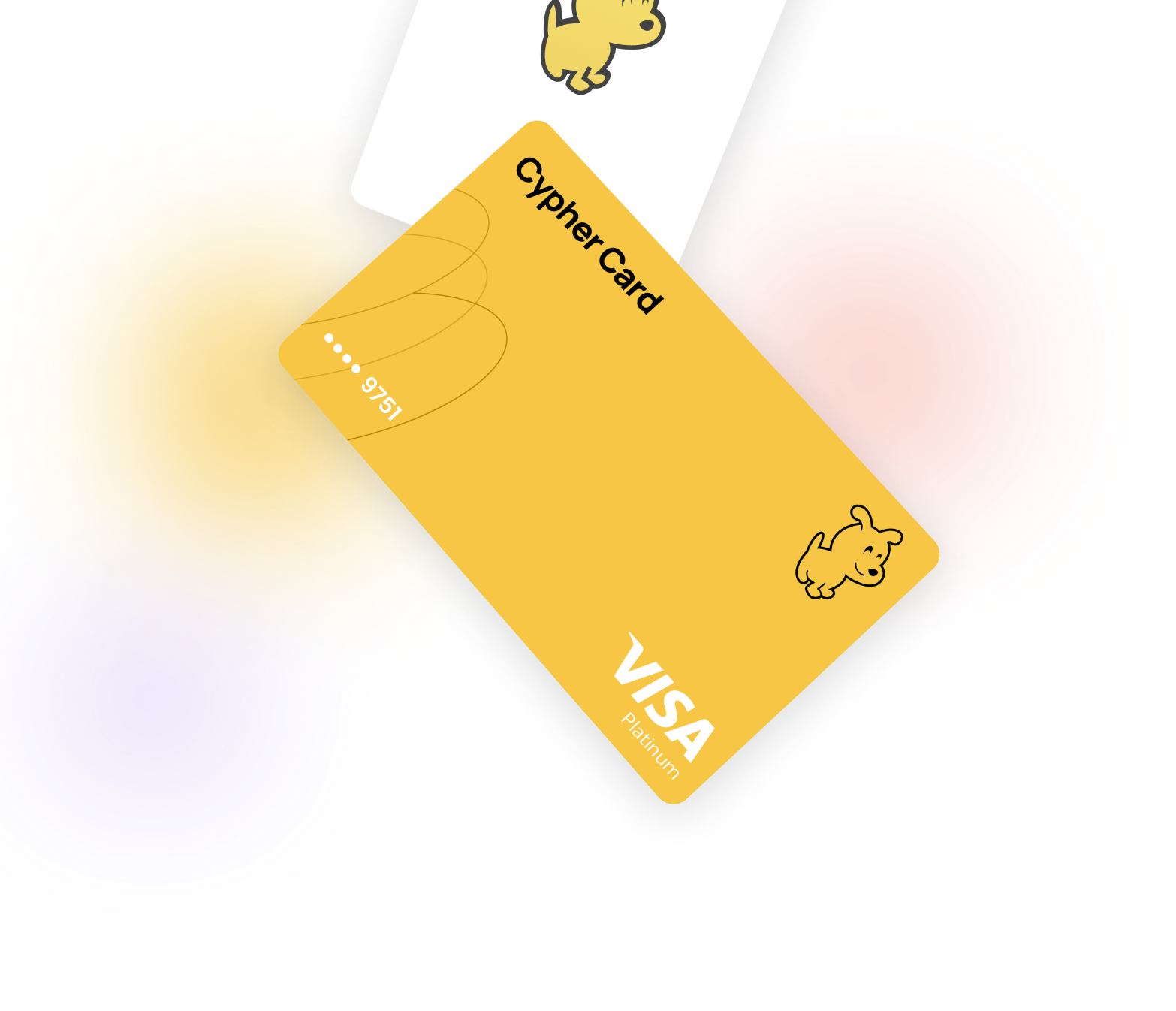
Cypher combines two key needs in one solution: access to credit and the ability to shop using crypto assets without having to sell them. It is designed for users who want to retain ownership while still actively transacting.
Cypher’s flagship feature:
- Cards that connect directly to the user’s wallet
- Ability to borrow against assets without selling
- Allows “spend without selling” – suitable for tax efficiency strategies
- Built-in bridging feature makes transactions easy
Cypher provides financial flexibility for users who want to maintain ownership of assets while still actively transacting.
5. MetaMask: Classic, but Less Competitive
As one of the most popular Ethereum wallets, MetaMask is trying to break into the neobank space with the launch of a payment card. However, the features offered are not competitive enough compared to other projects on this list.
Advantages and limitations of MetaMask Card:
- 1-3% cashback, but not applicable to the first $10K
- Directly integrated with MetaMask wallet
- No IBAN available, UX is not user-friendly
MetaMask Card is more suitable for existing users who are familiar with Web3, but is less optimal for new retail users.
Why is Neobank Crypto Important?

According to data from blocmates, the growing use of stablecoins in Latin America indicates a major transformation in the global financial system. Amid high inflation like in Argentina (178%) and high banking fees in Brazil (up to 4% of GDP), millions of people are choosing crypto not for speculation, but for survival.
With over 80% of the population owning a smartphone, but most not yet having a bank account, a crypto-based neobank becomes an obvious solution: allowing anyone to store assets in stablecoins like USDT, earn a yield, and spend them directly-without a bank intermediary.

The volume of use of crypto-based payment cards and apps has also seen a significant surge. According to data from Dune Analytics, crypto card transactions have continued to increase over time, reflecting their widespread adoption globally.
This increase in volume confirms that neobanks and crypto cards have evolved from mere Web3 experiments to an alternative financial infrastructure that is used daily
Conclusion
Crypto neobanks are not just a trend, but a representation of the future of a more open, transparent, and efficient digital finance industry. With projects like Ether.fi, RedotPay, and Tria leading the way in innovation, 2025 could be a pivotal moment in the global transition from traditional banks to blockchain-based solutions.
This trend drives neobanks’ business model to mimic the layer-1 blockchain approach: building an ecosystem that locks in users through an acquisition-retention-monetization cycle. Margins may be slim, but neobanks’ strength lies in scale and user flow.
The integration of stablecoins and yield on-chain enriches the product, while compliance light (regulation that remains safe but not onerous ) gives it a competitive advantage over traditional banks. The future of neobanks is not just about digital banking features, but becoming a complete, efficient, and global crypto-based personal finance center.
Reference:
- Ayan / Blocmates. Crypto Neobanks: Powering the Future of Finance. Accessed November 24, 2025.
- Arndxt / Threading on the Edge – Substack. Fat App Thesis for Neobanks. Accessed November 24, 2025.
- Dune. Crypto cards (all chains). Accessed November 24, 2025.
Share