What is Quant Trading? How it Works, Benefits and Risks
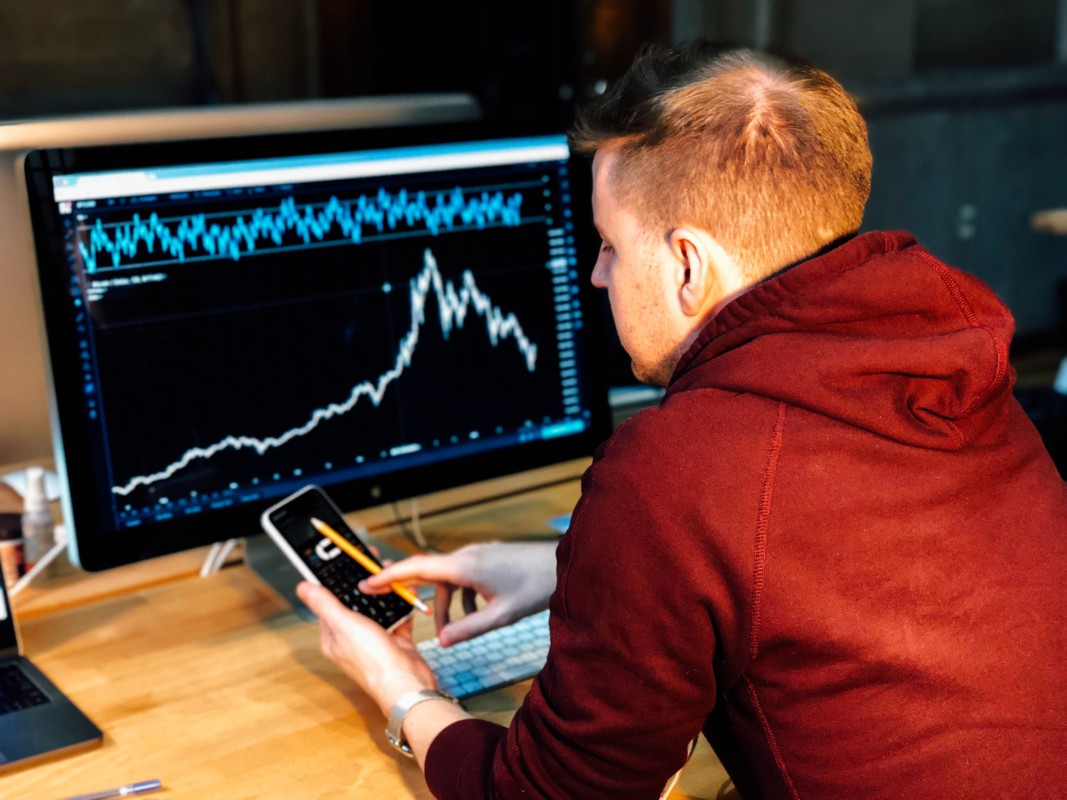
Jakarta, Pintu News – Quantitative Trading, or Quant Trading for short, has become one of the most advanced trading methods in modern financial markets. Combining mathematics, statistics, and computer programming, this approach is used by hedge funds, investment banks, as well as retail traders who want to automate their trading decisions with data-driven strategies.
In this article, we will discuss in detail what Quant Trading is, how it works, the benefits and risks, and the essential tools for Quant Trading traders.
What is Quant Trading?
Quantitative Trading is a method of trading in financial markets that uses mathematical models and statistical algorithms to identify trading opportunities. Instead of relying on intuition or manual technical analysis, quant traders use historical data and program code to make buying and selling decisions.
Read also: What is a Tranche? How it Works and Examples in the DeFi World
The main players in the world of Quant Trading are called Quants, professionals who combine expertise in finance, math, and computer science. They design automated trading systems capable of executing thousands of orders in a very short time based on pre-programmed parameters.
How Quant Trading Works

Quant Trading operates by collecting historical market data such as stock price, volume, volatility and other indicators. This data is then analyzed using statistical models to find predictable patterns or signals. Afterward, algorithms are created based on these findings and implemented into an automated trading system.
Each algorithm has its own strategy – such as mean reversion, momentum, arbitrage, or market-making. These systems are then tested in simulations (backtesting) before being applied to real markets to reduce the risk of loss.
Advantages and Risks of Quant Trading
Advantages
Data-driven Decision Making
Quantitative models eliminate emotional biases in the trading process, making decisions objective, consistent, and repeatable. This approach helps traders avoid common psychological traps such as fear and greed.
Scalability
Quantitative strategies are easy to expand and can be applied to large portfolios without increasing the level of complexity. Algorithms are capable of processing large amounts of data and executing across multiple markets simultaneously.
Efficiency and Speed
Automated trading systems are capable of executing orders very quickly and accurately, allowing traders to capture market opportunities in real-time. In the context of high-frequency trading , algorithms can even execute thousands of transactions per second to take advantage of very small price differences.
Read also: Tesla Shares Set 2-Day All-Time High, Elon Musk Effect?
Risk
Data Dependency
The success of quantitative strategies depends largely on the quality and accuracy of the data used. Poor data can result in erroneous analysis, leading to adverse trading decisions. Therefore, reliable data collection and management practices are essential.
Complexity and High Cost
Building and maintaining quantitative models requires substantial resources, both in terms of technical expertise and computing power. The development of a successful quantitative trading system requires significant investment in infrastructure and competent human resources.
Model Risk
Models that are overfitted to historical data may perform well in testing, but fail when applied in the ever-changing real market. The ease of backtesting sometimes encourages over-optimization, resulting in strategies that look perfect on paper but are ineffective in practice.
Therefore, the model must be constantly monitored and adjusted to keep it relevant and profitable. The ultimate goal is to create a profitable system, not a theoretically perfect one.
Essential Tools for Quant Traders

Quantitative traders (quants) run their own algorithms on real-time market data that includes prices and quotes. Therefore, they must understand the systems that provide such data and content. Here are some of the tools commonly used by quantitative traders:
- Market Data Access System: Such as Bloomberg data terminals, which provide various technical and quantitative analysis tools that support their trading strategies, such as Bollinger Bands, price charts, and other indicators.
- Computer with Programming Language Support: Quantitative traders typically use programming languages such as Perl, C++, Java, and Python to develop and execute their algorithmic strategies.
- Availability of Historical and/or Real-Time Data: Used for backtesting the strategies that have been developed before they are applied to the real market.
- Automated Access to Brokerage or Trading Accounts: Generally through Direct Market Access (DMA), which allows their systems to connect directly to the market to perform trade execution automatically and efficiently.
Overall, Quantitative Trading offers a highly systematic approach to the world of finance. By relying on data and technology, traders can optimize their decisions and reduce the influence of emotions. However, like any other strategy, Quant Trading still comes with risks that need to be managed properly.
FAQ
What is Quant Trading and who can use it?
Quant Trading is a trading method based on data and mathematical algorithms. Anyone can use it, provided they have a basic understanding of coding, statistics, and financial markets.
What are the biggest risks in Quant Trading?
The biggest risks include model failure, overfitting against historical data, and technical errors in algorithm implementation.
That’s the latest information about crypto. Follow us on Google News to get the latest crypto news about crypto projects and blockchain technology. Also, learn crypto from scratch with complete discussion through Pintu Academy and stay up-to-date with the latest crypto market such as bitcoin price today, xrp coin price today, dogecoin and other crypto asset prices through Pintu Market.
Enjoy an easy and secure crypto trading experience by downloading Pintu crypto app via Google Play Store or App Store now. Also, get a web trading experience with various advanced trading tools such as pro charting, various types of order types, and portfolio tracker only at Pintu Pro.
*Disclaimer
This content aims to enrich readers’ information. Pintu collects this information from various relevant sources and is not influenced by outside parties. Note that an asset’s past performance does not determine its projected future performance. Crypto trading activities have high risk and volatility, always do your own research and use cold cash before investing. All activities of buying and selling bitcoin and other crypto asset investments are the responsibility of the reader.
Reference:
- Avatrade. Introduction to Quantitative Trading. Accessed on December 17, 2025
- CFI. Quantitative Trading. Accessed on December 17, 2025
- Investopedia. Master Quantitative Trading: Strategies and Profit Opportunities. Accessed on December 17, 2025
- Shobhit Seth. Quants: Profitable Trading With Advanced Algorithms and Models. Accessed on December 17, 2025