10 Crypto with Breakout Potential as the Market Recovers
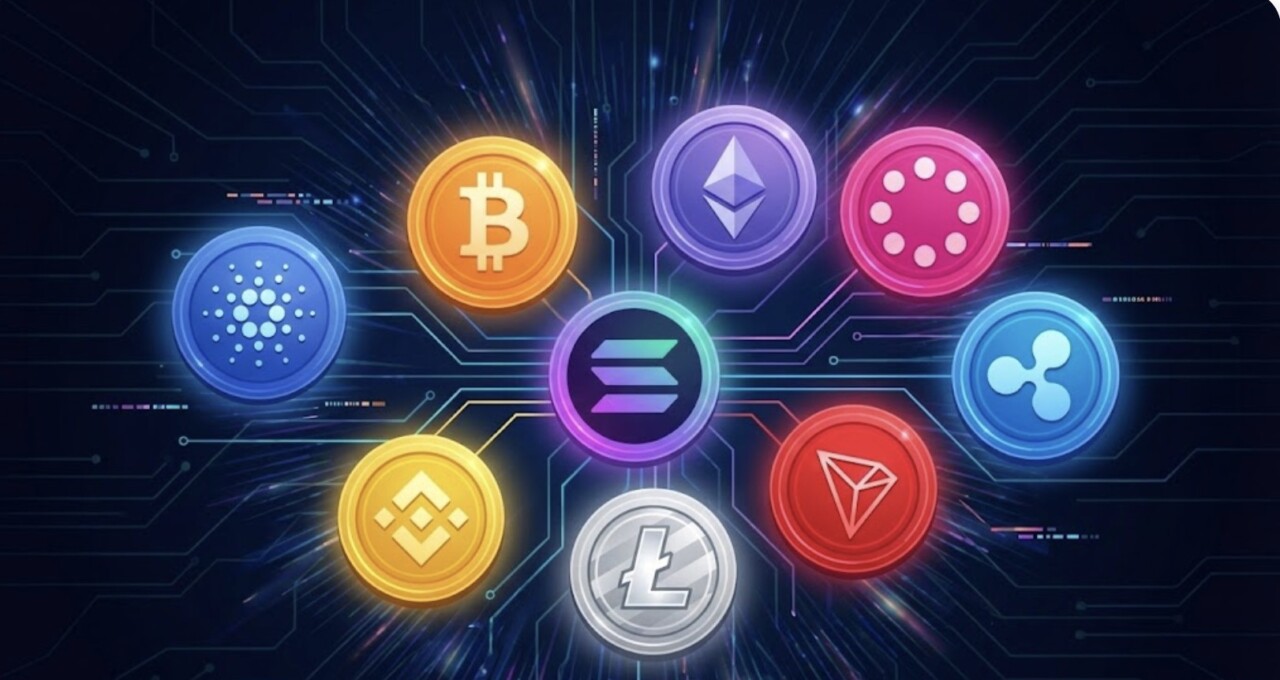
Jakarta, Pintu News – According to Forbes, here is a selection of 10 broader cryptocurrencies with a utility orstore-of-value thesis and a market capitalization greater than $5 billion. Crypto assets with a market capitalization of at least $5 billion are typically more stable and have higher levels of institutional adoption.
Cardano (ADA)

Cardano is a “next generation” blockchain platform that aims to improve upon the limitations of legacy blockchains such as Bitcoin and Ethereum. ADA pioneered proof-of-stake validation to reduce environmental impact and supports smart contracts and DApps like Ethereum.
Read also: 3 Rarely Highlighted Bullish Bitcoin Indications
Cardano’s ADA token has seen relatively moderate growth compared to other major crypto coins. In 2017, the price of ADA was around $0.02. As of February 19, 2026, it was trading at $0.27, which reflects an increase of 1,151%.
Pros:
- Energy-efficient consensus model.
- Focus on real-worlduse cases.
Disadvantages:
- Slow rollout of features compared to its competitors.
- Smaller DApp ecosystem.
BNB (BNB)
Originally launched to pay trading fees on the Binance exchange, BNB has now evolved into a utility token used for transactions, payments, and DApps within the Binance ecosystem.
As an added benefit, users can get a discount on trading fees when using BNB on Binance crypto exchange. However, there is also another aspect of utility; the token can be used to pay transaction fees on the BNB Smart Chain that supports smart contracts and DApps.
At $602.71 on February 19, 2026, the value of BNB has soared by a staggering 522,433%.
Pros:
- Binance’s growing ecosystem.
- Continuous quarterly coinburns to reduce supply.
Disadvantages:
- High dependence on Binance’s success.
- Strict regulatory oversight ofcentralized exchanges.
Bitcoin (BTC)

Created in 2009 by the pseudonymous Satoshi Nakamoto, Bitcoin is the original and most globally recognized cryptocurrency.
This crypto world “OG” runs on a decentralized blockchain network. The network uses an energy-intensive proof-of-work consensus system. In this network, miners validate transactions on thechain by solving complex mathematical puzzles. For each successfully validated block, miners are rewarded with 3.125 BTC per block, which is currently worth around $206,672.81.
The proof-of-work consensus model is often criticized for its carbon footprint. The US Energy Information Agency (EIA) estimates that crypto mining, which is used by Bitcoin, represents up to 2.3% of total electricity consumption in the United States.
The price of BTC itself has soared from around $0.06 in July 2010 to approximately $66,135.30 as of February 19, 2026, registering a fantastic increase of 106,849,659%.
Pros:
- It is viewed as “digital gold” and astore of value.
- High liquidity and better market stability than other coins.
Disadvantages:
- Very high energy consumption due to proof-of-work system.
- Slower transaction speeds and higher fees than newer networks.
Polka dot (DOT)
Launched by Ethereumco-founder Gavin Wood in 2020, Polkadot is designed to bring together different blockchains that were previously isolated from each other.
The Polkadot Network facilitates the transfer of tokens and data between major networks such as Ethereum and Bitcoin. At the core of Polkadot are parachains: independent, customizable blockchains capable of lightening the processing load while still leveraging Polkadot’s key security infrastructure.
Read also: Solana (SOL) ready to soar? $3.78M ETF inflow pushes price to $90!
Polkadot’s price at launch in August 2020 was $2.79. Currently, it is trading at $1.28, which reflects a price performance of -54%.
Pros:
- Enablesconfidential computing for sensitive data (such as health records).
- A unique network that supports high scalability and functional specialization.
Disadvantages:
- Highly complex network architecture.
- An ecosystem that is still in the development stage when compared to Ethereum.
Ethereum (ETH)
Ethereum leverages its powerful blockchain platform to build decentralized applications, known as DApps. This crypto is the brainchild of Vitalik Buterin, who created it to apply blockchain technology to the aspect ofprogrammability.
So, how is Ethereum used in the programming world? Developers use Ethereum forsmart contracts, which are agreements that can run automatically with code embedded directly into the blockchain. There are many use cases for DApps, as they can be applied to the financial sector, supply chain management, and more.
ETH is the native coin on this network. Developers use ETH to pay “gas” fees. This fee compensates network validators for their computational work in completing transactions and smart contracts. From a price of $2.83 in August 2015 to approximately $1,929.25 as of February 19, 2026, the value of ETH has grown by 67,913%.
Pros:
- Huge developer ecosystem.
- Various tokens and services use the Ethereum network.
Disadvantages:
- Scalability challenges (large traffic volumes can cause bottlenecks).
- High gas costs.
Litecoin (LTC)
Launched in 2011 by former Google engineer Charlie Lee, Litecoin is often referred to as “digital silver” compared to Bitcoin which is “digital gold”. Built on Bitcoin’s source code, Litecoin (LTC) offers a faster block time of 2.5 minutes per block compared to Bitcoin’s 10 minutes.
Just like Bitcoin, Litecoin uses proof-of-work consensus and experiences halving events. It should be noted that LTC has a limited supply of 84 million coins. Currently, there are 76.9 million LTC in circulation. The value of LTC has risen by 1,113% since its launch in April 2013.
Pros:
- Faster transactions than Bitcoin.
- Long-established credibility and network stability.
Disadvantages:
- Limited innovation compared to newer blockchains.
- Facing stiff competition from faster networks.
Solana (SOL)

Solana (SOL) is designed for speed and scalability, using a hybrid proof-of-stake and proof-of-history system to process thousands of transactions per second.
SOL is recovering its developer and user activity despite having experienced notable network outage issues in the past. Solana supporters believe that the asset is a good alternative to Ethereum, rivaling its competitor in terms of speed and cost factors.
Since its launch in April 2020, SOL has risen to $80.38 as of February 19, 2026, registering a gain of 1,151%.
Pros:
Disadvantages:
- Periodic network outages and stability issues.
- Centralization concerns due to validator control.
TRON (TRX)
Tron (TRX) initially launched in 2017 on the Ethereum token network before eventually moving to its own chain. Its proof-of-stake consensus makes the network energy efficient, while TRX, as its native token, powers transactions and smart contracts.
One of the initial premises of this crypto is to help original content creators to receive revenue for their work. The platform supports smart contracts and DApps. TRX has grown from $0.0019 in 2017 to approximately $0.28 as of February 19, 2026.
Pros:
- Low transaction costs.
- Strong presence in the entertainment and gaming sectors.
Disadvantages:
- Leadership under Justin Sun; the Securities and Exchange Commission (SEC) charged Sun in 2023 for alleged market manipulation regarding TRX supply.
- Fewer institutional use cases than its competitors.
XRP
XRP (XRP) was created by Ripple Labs to facilitate fast and low-cost cross-border payments. It acts as a bridge between currencies, allowing instant transfers at minimal cost.
Read also: Ripple (XRP) Price Tests Key Support, Will Breakout to $1.5 Happen?
Unlike Bitcoin and other cryptocurrencies that are mined, XRP tokens enter circulation whenever Ripple chooses to sell the coins. For that reason, concerns have been raised over the centralized nature that controls the supply of XRP. XRP hit a price of $1.40 on February 19, 2026, registering a gain of 23,671%.
Pros:
- Strong use cases in global finance.
- Supported by institutional partnerships.
Disadvantages:
- Ripple co-founder Chris Larsen (worth $7.6 billion) owns a sizable portion of XRP.
- Centralization concerns due to Ripple’s control over XRP supply.
Lido Staked ETH (stETH)
As the name implies, this is a token with an ETH value that is being staked. stETH allows Ethereum holders to earn staking rewards while keeping their assets liquid.
One of the downsides of “regular” Ethereum staking is that you need 32 ETH (about $61,736) to stake, and there are varyinglock-up periods. According to the Coinbase exchange (COINX), these lock-up periods range from a few hours to a few days.
The advantage of stETH is the ability to collect staking rewards while gaining liquidity on the DeFi platform. However, the large share of ETH staked through stETH has raised concerns regarding decentralization.
Nevertheless, stETH remains a popular choice for crypto investors seeking passive income. stETH has grown from $594.09 in December 2020 to $1,932.79 as of February 19, 2026. The token seeks to mirror the price of ETH.
Pros:
- Earn staking rewards while maintaining asset liquidity.
- Can be used across various major DeFi protocols.
Disadvantages:
- Concerns of centralization due to Lido’s dominance in the market.
- It is highly dependent on the performance of the Ethereum price.
Follow us on Google News to stay up to date with the latest in crypto and blockchain technology. Check Bitcoin price, usdt to idr and tokenized nvidia stock price through Pintu Market.
Enjoy an easy and secure crypto trading and crypto gold investment experience by downloading the Pintu crypto app via Play Store or App Store now. Also, experience web trading with advanced trading tools such as pro charting, various order types, and portfolio tracker only at Pintu Pro.
*Disclaimer
This content aims to enrich readers’ information. Pintu collects this information from various relevant sources and is not influenced by outside parties. Note that an asset’s past performance does not determine its projected future performance. Crypto trading activities are subject to high risk and volatility, always do your own research and use cold hard cash before investing. All activities of buying and selling Bitcoin and other crypto asset investments are the responsibility of the reader.
Reference:
- Forbes. Top 10 Cryptocurrencies Of February 19, 2026. Accessed on February 27, 2026