5 Key Predictions That Could Shape the Crypto Market in 2026
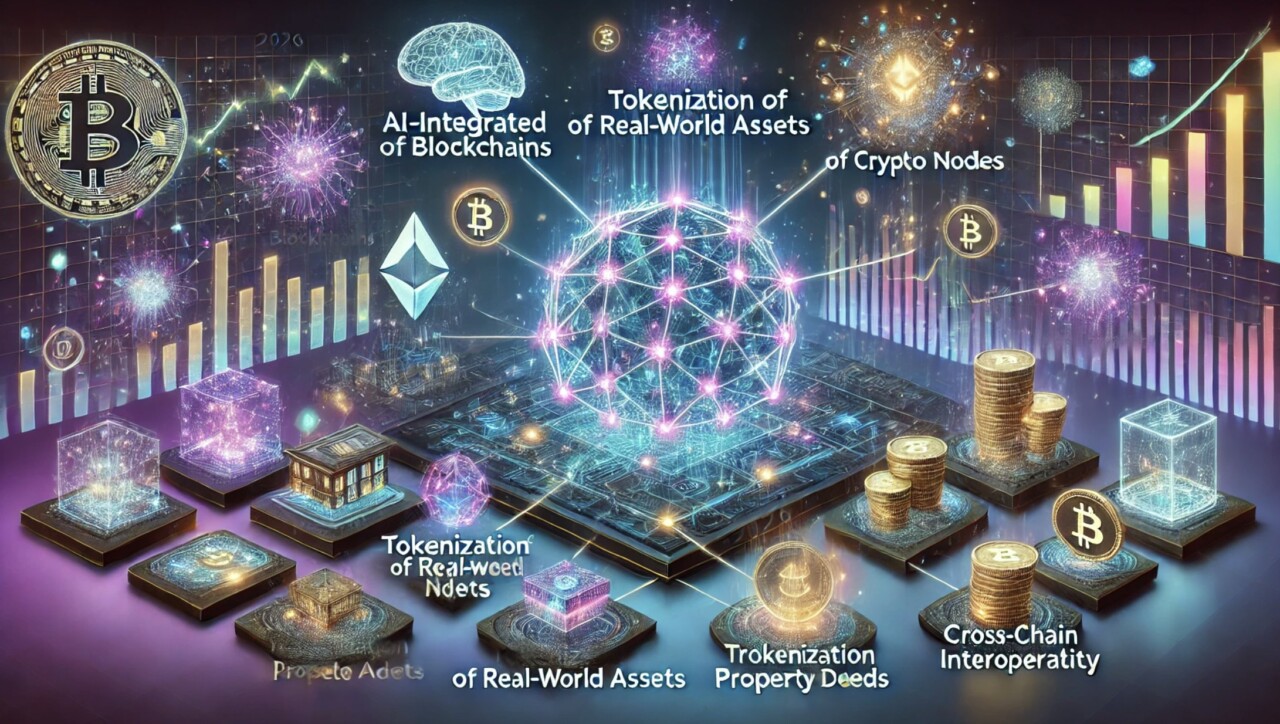
Jakarta, Pintu News – Despite facing many challenges such as high volatility, regulatory doubts, and various other opposing factors, interest in crypto is growing. Demand for these digital assets continues to increase, as does the variety of their uses.
So, what else can we expect in the near future – especially in 2026?
This article will review five key crypto market predictions that are expected to shape the dynamic and tumultuous industry landscape in the coming year.
Why 2026 will be an Important Turning Point for the Crypto World
Decreasing risk, increasing potential and profit – this is the current state of crypto, despite the challenges it faces.
Read also: How to Find Crypto Worth Paying Attention to Right Now Without Falling for the Hype
However, it takes time for things to stabilize and for the new changes that support the crypto ecosystem to start having a real impact. Based on some market predictions, that momentum is expected to last through 2026.
Next year is predicted to be the stage for major announcements in the crypto world that begin to show their full, or at least near full, impact. The main focus in the 2026 crypto predictions is the growing integration of crypto assets with traditional markets, as well as closer integration with public systems.
Potential Crypto Risks and Challenges in 2026
By way of introduction, while the coming year holds great promise for crypto development globally, it is important to remain cognizant of the risks that still loom over the world of digital assets.
Here are some key challenges to note:
- Macroeconomic volatility and shocks: Changes in interest rates, potential recessions or geopolitical tensions can suddenly affect crypto price trends.
- Regulatory pressure: Policies towards crypto may change or be enforced suddenly, whether in Europe, the United States, or Asia.
- Security and governance in DeFi: Cyberattacks on decentralized systems, protocol failures, and weaknesses in governance systems remain serious threats.
- Market fragmentation: Intense competition on Layer-2 networks, a flood of tokens, and excessive speculation on NFTs could create market distortions.
For anyone looking to dive into the crypto world, it is important to come armed with knowledge and consider consulting an expert. With the right approach and adequate information, these limitations can be turned into opportunities.
Having market predictions can also be a very useful tool. So, without further ado, let’s discuss the major crypto predictions for 2026.
Prediction 1: Bitcoin and Major Crypto will Reach New Price Milestones
Research firm Bernstein projects that the price of Bitcoin could reach $200,000 as early as 2026, driven by fund inflows from ETFs as well as growing demand from financial institutions. The options market linked to BlackRock’s IBIT ETF estimates that BTC will hover around $174,000 by 2026.
Meanwhile, CoinDex’s on-chain analysis “cautiously” forecasts that BTC prices are likely to trade within a range of $80,000 to $107,000, with the average approaching $95,000 in the near term.
For now, BTC prices tend to stabilize and continue to get support from institutional investors. This makes BTC able to stay within the $90,000-$120,000 base price range.
If Bitcoin reaches an average price of $150,000 to over $200,000 – something that is highly likely thanks to fund inflows, halving cycles, and demand as a hedge asset – then this would be a major achievement in a bull market scenario.
However, the promised macroeconomic policies have yet to actually be enacted, so old risks such as regulatory opacity and BTC price volatility remain high. As for Bitcoin’s projected market capitalization in 2026 – which currently (2025) stands at $2.42 trillion – it has the potential to grow by several trillion dollars more as mass adoption increases globally.
Read also: Altcoin Explosion: How to Maximize the Potential of Crypto Trading?
Prediction 2: Decentralized Finance (DeFi) will Break into the Global Financial Mainstream
The DeFi market, which in 2025 was estimated to be worth around $21 billion, is projected to grow to exceed $231 billion by 2030, with an average annual growth rate (CAGR) of around 53%.
By 2026, it is estimated that various DeFi platforms will begin to implement AI-based risk management, strengthening on-chain security, smart contract resilience, and yield accuracy derived directly from the blockchain.
As crypto adoption increases by the general public and regulations begin to be implemented in key countries such as the United States, DeFi will move closer to everyday use by ordinary consumers.
This means we can expect the integration of liquidity from centralized finance (CeFi) with new features from DeFi – creating new opportunities for blockchain-based lending, financing, and investment returns. With on-chain audits to come, this integration will also pave the way for greener and more transparent regulatory compliance.
Prediction 3: The Regulatory Framework will Become Clearer and More Supportive

The United States Congress is increasingly addressing crypto issues and actively pushing for new supportive bills, such as the CLARITY Act, GENIUS Act, and stablecoin oversight. Donald Trump’s second term victory is expected to further encourage the easing of crypto oversight and regulation in the US.
One of the most important predictions in the development of crypto regulation is the possibility of enacting a fully crypto-supportive legal framework in the United States as early as 2026.
Plus, Trump’s pro-crypto policies – including the easing of legal action against the industry, clarity on taxation, recognition of the CBDC framework, and plans to build a national Bitcoin reserve – will all contribute to increasing public confidence in crypto.
This support will also encourage the use of stablecoins as a payment method, the expansion of crypto ETFs, and closer links with the traditional banking system.
Prediction 4: NFTs and the Metaverse will Evolve Beyond Just Digital Collections
NFTs are expected to be increasingly connected with real utility functions, making them digital assets that are not only of collectible value, but also of practical use.
Read also: 6 Hottest Altcoins of the Week with Important Events Worth Paying Attention to!
Thanks to the development of the Metaverse, NFTs will be integrated with real-world identities and assets, enabling their use in more concrete scenarios – such as the purchase of virtual property in the metaverse world.
From previously focusing only on art and entertainment, NFTs are now starting to transform towards more functional functions, such as:
- Fractional property (collective ownership of assets),
- Exclusive membership,
- Peer-to-peer financing, and
- Immersive economy in the Metaverse.
As the population of the Metaverse continues to grow, NFTs are also predicted to evolve into a kind of digital passport used for finance, asset ownership, and social interaction. This initial transformation is expected to begin in 2026.
Prediction 5: Adoption of Layer-2 Solutions and Scalability Improvements will Rise Sharply

It is expected that Layer-2 Ethereum and Bitcoin-style Layer-2 (such as BitcoinT Hyper) will significantly increase transaction capacity and lower overall fees. Advanced concepts such as zero-knowledge rollups, optimistic rollups, and SVM-based chains are expected to begin mass adoption by 2026.
Layer-2 (L2) is now considered the next evolutionary stage of the largest blockchain networks such as Ethereum and Bitcoin. It promises drastically increased throughput, faster block times, and protocol optimization.
The birth of the Layer-2 ecosystem also paved the way for various innovations in the DeFi field, including:
- ZK-Rollups (Zero-Knowledge): Enables faster and cheaper DeFi payments and transactions by grouping many transactions off-chain and uploading cryptographic proofs to the main network.
- Optimistic Rollups: Offers a cost-effective smart contract environment by processing batches of transactions off-chain and only sending summary data to the on-chain, assuming transactions are legitimate by default.
- SVM-Based Chains: Bring Solana-level performance to new rollups by running execution through the Solana Virtual Machine.
These technologies will be key to scalability and efficiency in the crypto world in 2026 and beyond.
FAQ
What is Bitcoin (BTC)?
Bitcoin (BTC) is a digital currency created in 2009, which uses peer-to-peer technology to facilitate instant payments.
What is Ethereum (ETH)?
Ethereum (ETH) is a decentralized blockchain platform that allows developers to build and run decentralized applications and smart contracts.
What is DeFi?
DeFi, or decentralized finance, is a term used for various financial applications on the blockchain that aim to remove middlemen from financial transactions.
That’s the latest information about crypto. Follow us on Google News to get the latest crypto news about crypto projects and blockchain technology. Also, learn crypto from scratch with complete discussion through Pintu Academy and stay up-to-date with the latest crypto market such as bitcoin price today, xrp coin price today, dogecoin and other crypto asset prices through Pintu Market.
Enjoy an easy and secure crypto trading experience by downloading Pintu crypto app via Google Play Store or App Store now. Also, get a web trading experience with various advanced trading tools such as pro charting, various types of order types, and portfolio tracker only at Pintu Pro.
*Disclaimer
This content aims to enrich readers’ information. Pintu collects this information from various relevant sources and is not influenced by outside parties. Note that an asset’s past performance does not determine its projected future performance. Crypto trading activities have high risk and volatility, always do your own research and use cold cash before investing. All activities of buying and selling bitcoin and other crypto asset investments are the responsibility of the reader.
Reference:
- EZ Blockchain. 5 Crypto Predictions for 2026. Accessed on November 28, 2025