Is a New Era of Bitcoin Beginning? The Changing Halving Narrative

Jakarta, Pintu News – In the cryptocurrency world, the narrative of Bitcoin halving occurring every four years has become oversimplified. Today, the halving’s impact is no longer limited to a predictable schedule or uniform results.
As Bitcoin has evolved into a globally traded asset, the factors that shape Bitcoin market behavior have evolved beyond just the halving event itself.
How Cycle Narratives Become Too Simple
An analyst on platform X known as Deg_ape revealed that Bitcoin’s halving cycle was never a rigid clock of four years. The BTC cycle actually has more to do with phase transitions, changing liquidity conditions, and market behavior, rather than simply buying every four years and selling four years later. The cycle actually reflects macro bear phases that expand, contract, overlap, and lengthen based on macro flows and market positioning.
Also Read: How Crypto is Remaking the Financial System, AI, and Privacy Until 2026 According to a16z Crypto
Why Retail Holders Give Up on Historical Rates
A crypto analyst known as OnChainCollege highlighted that retail holders are under pressure. On-chain data shows the deepest 30-day balance decline among retail wallets since 2018, a level usually associated with periods of extreme fear and capitulation. While retail balances are experiencing sharp declines, a larger group of holders are quietly absorbing the difference.
Related Readings and Current Market Behavior
Market sentiment is currently split into two groups with diametrically opposed perspectives; from retail reacting to price movements to large holders responding to structure, liquidity and long-term positions. Meanwhile, the old whales continue to distribute their holdings during this bull market, but the mega whales and institutional participants are starting to emerge as marginal buyers.
Conclusion
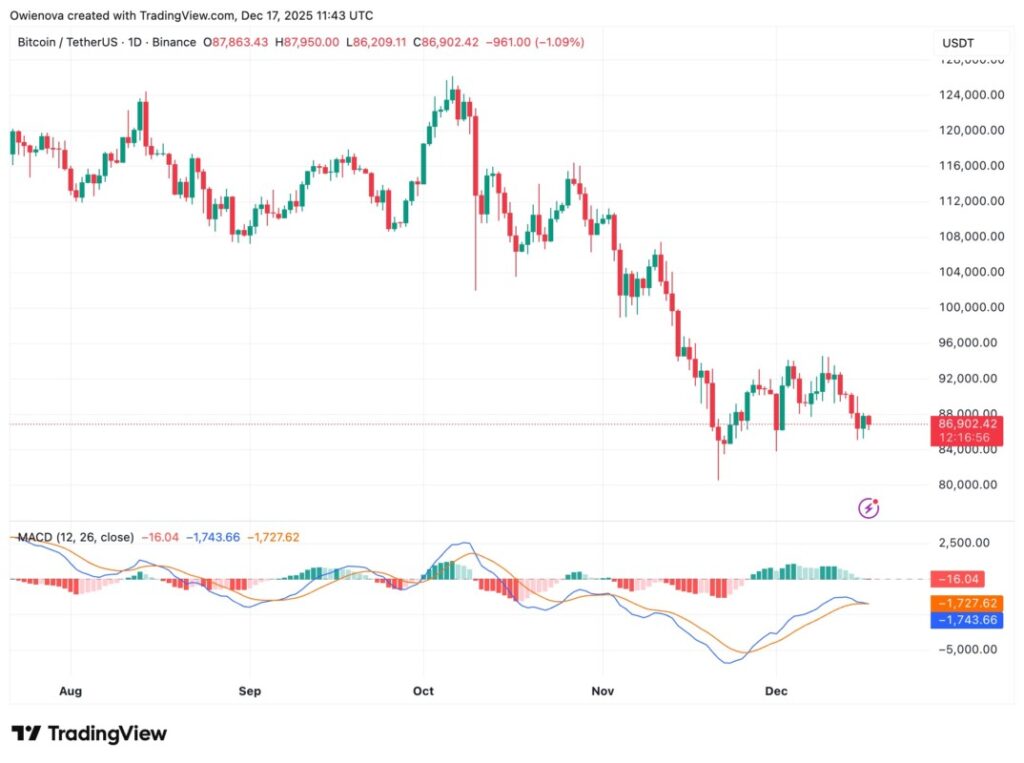
Changes in the Bitcoin halving narrative point to more complex and layered market dynamics than once understood. A deeper understanding of these factors is important for anyone involved in the cryptocurrency market, whether as an investor, analyst, or market watcher.
Also Read: 7 XRP Facts on Institutional Finance via VivoPower’s $900 Million Exposure Structure
Follow us on Google News to get the latest information about crypto and blockchain technology. Check Bitcoin price today, Solana price today, Pepe coin and other crypto asset prices through Pintu Market.
Enjoy an easy and secure crypto trading experience by downloading Pintu crypto app via Google Play Store or App Store now. Also, get a web trading experience with various advanced trading tools such as pro charting, various types of order types, and portfolio tracker only at Pintu Pro.
*Disclaimer
This content aims to enrich readers’ information. Pintu collects this information from various relevant sources and is not influenced by outside parties. Note that an asset’s past performance does not determine its projected future performance. Crypto trading activities are subject to high risk and volatility, always do your own research and use cold hard cash before investing. All activities of buying andselling Bitcoin and other crypto asset investments are the responsibility of the reader.
FAQ
Q1: What is Bitcoin (BTC) halving?
A1: Bitcoin (BTC) Halving is an event that reduces the block reward given to Bitcoin miners by half, occurring every four years.
Q2: Why is the Bitcoin halving cycle no longer considered a rigid clock?
A2: Bitcoin’s halving cycle has evolved and now reflects more phase transitions, changing liquidity conditions, and market behavior, rather than just the quadrennial buying and selling cycle.
Q3: What happened to Bitcoin retail holder balances in 2018?
A3: In 2018, there was the deepest 30-day balance decline among retail wallets, which is usually associated with periods of extreme fear and capitulation.
Q4: Who are the marginal buyers in the current Bitcoin market?
A4: In the current Bitcoin market, mega whales and institutional participants are emerging as marginal buyers, taking over from the old whales who continue to distribute their holdings.
Q5: How should investors respond to changes in the Bitcoin halving narrative?
A5: Investors are advised to understand changes in the halving narrative and broader market dynamics to make more informed investment decisions.
Reference
- NewsBTC. Bitcoin: New Era Loading. Accessed on December 19, 2025