Will Bitcoin Fall to Quantum Computer Sophistication?

Jakarta, Pintu News – The battle between blockchain technology and the advancement of quantum computers is heating up. With rapid developments in the field of quantum computing, many are questioning the future of Bitcoin security. While some platforms such as Solana have started a move towards quantum security, Bitcoin is still in the phase of intensive discussions on its security updates.
Blockchain Prepares for the Quantum Threat
Solana recently announced that it has implemented post-quantum signatures on their testnet, showing a proactive step in securing its network. Ethereum is not far behind, with a clear roadmap to achieve quantum security. This shows a trend where blockchain platforms are starting to seriously consider the risks posed by quantum computers.
On the other hand, the Bitcoin community is still engaged in discussions on how and when to implement similar technologies. While there are proposals being actively discussed, there are still doubts regarding the speed at which implementation can take place before the quantum threat becomes real.
Also Read: How Crypto is Remaking the Financial System, AI, and Privacy Until 2026 According to a16z Crypto
Michael Saylor: Optimism Amidst Doubt
Michael Saylor, a leading figure in the corporate adoption of Bitcoin, has a different view. According to him, quantum computing will strengthen, not undermine, Bitcoin. Saylor believes that big tech companies will solve this problem and will not allow quantum technology to become mainstream before governments update their systems.
However, many experts disagree with Saylor’s view that they find it too simplistic and lacking in worry. Eli Ben-Sasson, founder of Starknet and Zcash, stated that Saylor’s plan may be theoretically doable, but it is difficult to implement in practice due to the difficulty of reaching consensus.
Quantum Risk Analysis of Bitcoin
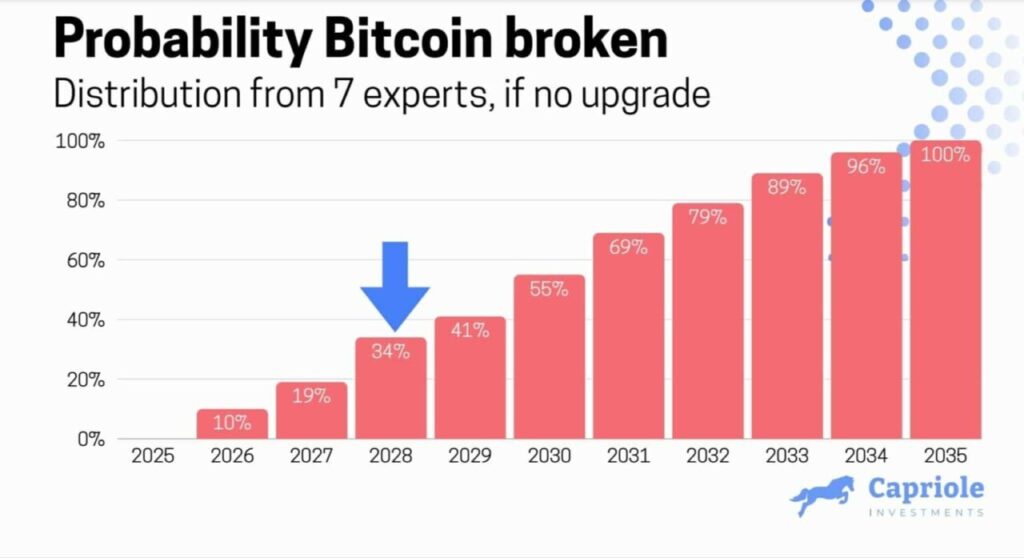
Despite breakthroughs by Google in quantum computing, the technology is still estimated to take another 5-15 years before it can truly threaten the Bitcoin network and wallets. Charles Edwards, founder of Capriole Investments, estimates that there is a 34%-55% chance that Bitcoin could be hacked by quantum computers by 2028-2030.
Bitcoin currently uses the Elliptic Curve Digital Signature Algorithm (ECDSA) and the SHA-256 hashing mechanism, where ECDSA can be easily cracked by quantum computers. This puts addresses in older formats, especially from the Satoshi era, at high risk, while new Segwit addresses are more secure from remote quantum attacks.
Conclusion
With the possibility of quantum threats increasing, it is important for the Bitcoin community to accelerate the discussion and implementation of quantum security solutions. The future of Bitcoin may depend on how quickly and effectively the community can adapt to evolving technologies. User safety and network integrity should remain top priorities in the face of these potential risks.
Also Read: 7 XRP Facts on Institutional Finance via VivoPower’s $900 Million Exposure Structure
Follow us on Google News to get the latest information about crypto and blockchain technology. Check Bitcoin price today, Solana price today, Pepe coin and other crypto asset prices through Pintu Market.
Enjoy an easy and secure crypto trading experience by downloading Pintu crypto app via Google Play Store or App Store now. Also, get a web trading experience with various advanced trading tools such as pro charting, various types of order types, and portfolio tracker only at Pintu Pro.
*Disclaimer
This content aims to enrich readers’ information. Pintu collects this information from various relevant sources and is not influenced by outside parties. Note that an asset’s past performance does not determine its projected future performance. Crypto trading activities are subject to high risk and volatility, always do your own research and use cold hard cash before investing. All activities of buying andselling Bitcoin and other crypto asset investments are the responsibility of the reader.
FAQ
How could the threat of quantum computing affect Bitcoin (BTC)?
The threat of quantum computing could affect Bitcoin (BTC) due to the ability of quantum computers to break cryptographic algorithms used in the Bitcoin network, such as the Elliptic Curve Digital Signature Algorithm (ECDSA), which is currently used in Bitcoin security.
What are Solana and Ethereum doing to deal with the quantum threat?
Solana has implemented post-quantum signatures in their testnet, while Ethereum is developing a roadmap to achieve quantum security, showing a proactive step in securing its network from the threat of quantum technology.
What are Michael Saylor’s views on quantum computing and Bitcoin?
Michael Saylor believes that quantum computing will strengthen Bitcoin, not damage it. According to him, big tech companies will solve this problem before quantum technology becomes mainstream, and governments will update their systems to deal with it.
Why do some experts disagree with Michael Saylor’s view?
Some experts, such as Eli Ben-Sasson, argue that Saylor’s views are too simplistic and difficult to implement in practice, due to the difficulty of reaching consensus within the tech and crypto communities regarding the implementation of quantum security solutions.
How long will it be before the threat of quantum computing threatens Bitcoin?
Quantum computing is still estimated to take about 5-15 years to reach a point where it can effectively threaten Bitcoin networks and wallets. However, experts estimate there is a 34%-55% chance that Bitcoin could be hacked by quantum computers by 2028-2030.
What can be done to protect Bitcoin from quantum threats?
To protect Bitcoin from quantum threats, the crypto community needs to accelerate the discussion and implementation of quantum security solutions, including replacing cryptographic algorithms that are vulnerable to quantum attacks with methods that are more resistant to these threats.
Reference
- AMB Crypto. Bitcoin’s Quantum Future: Saylor plays down risks as experts raise red flags. Accessed on December 19, 2025