5 Fun Facts: Bitcoin Often Rebounds in February – Lessons from Historical Data

Jakarta, Pintu News – Historical analysis shows that Bitcoin has a tendency to record positive performance in February after a period of decline in January. This trend is not just baseless optimism, but is supported by more than a decade of data that shows seasonal patterns in the price movements of the world’s largest crypto asset.
BTC Historical Statistics Show February Trending Positive
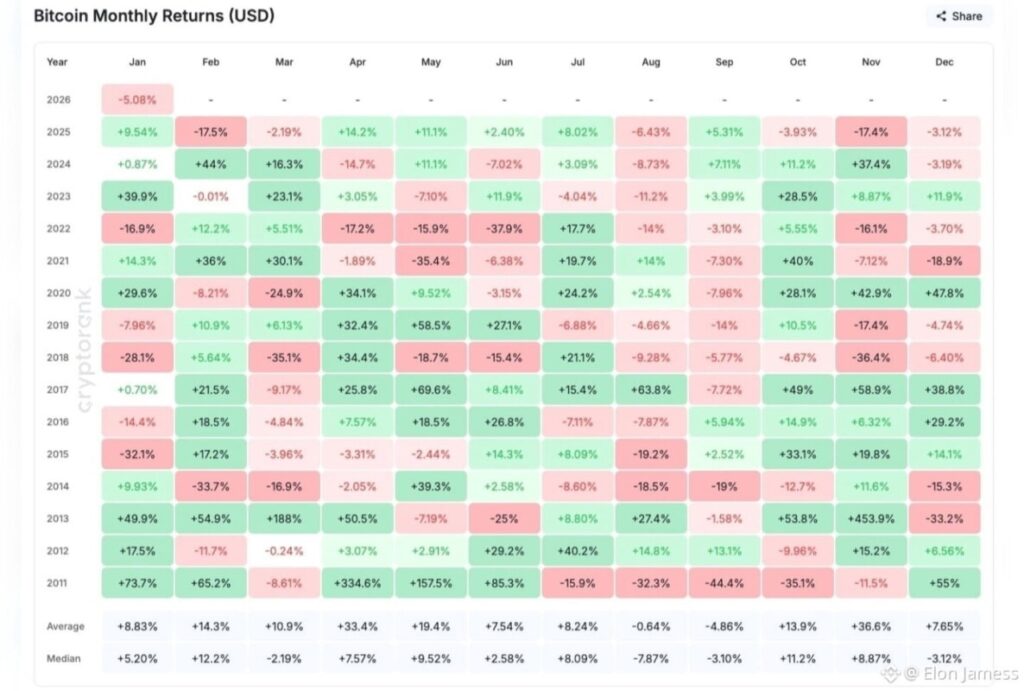
Historical data from more than 13 years shows that February is more likely than any other month to record a rise in Bitcoin price. In that period, 9 out of 13 times Bitcoin recorded a positive return in February, despite January’s correction. The average Bitcoin gain in this month is around 14.3%, while the median return is around 12.2%. This pattern indicates that early-year corrections do not always continue into a long downtrend.
A notable example is Bitcoin’s rebound in previous cycles, including 12.2% growth in February 2023 and 36% growth in February 2021, despite the previous month’s pressure. This shows that short-term dynamics do not always determine the medium-term direction.
Also Read: 7 Ethereum (ETH) 2026 Price Predictions: Bullish Targets, Risks & Projections
Correlation Between January and February in the Crypto Market
While Bitcoin doesn’t necessarily rise every February, historical patterns show that February often corrects January’s price drop. Years such as 2022 and 2020 saw sharp declines in January, followed by significant rebounds in February. This pattern provides important context for investors to understand that an early-year correction in the crypto market could be a consolidation phase before a potential rebound.
It also shows that seasonality can occur not only in traditional markets like stocks, but also in crypto markets, which are affected by liquidity factors, risk sentiment, as well as global demand dynamics.
BTC Price Support Is a Seasonal Key Level
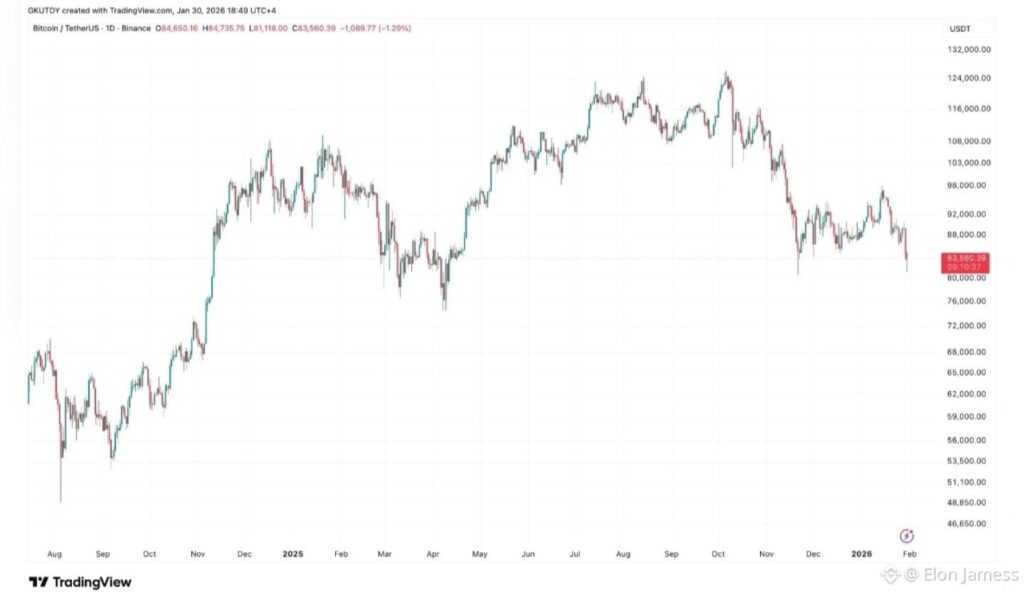
Bitcoin was below the USD 85 000 level for a few days at the end of January, but history shows that if the support level around USD 80 600 holds, a rebound towards resistance in the USD 90 000 area and above remains highly likely the following month. This makes technical support and seasonal patterns important signals worthy of investors’ attention.
Young and novice investors need to understand that technical support does not stand alone but interacts with market sentiment, volume momentum, and historical data that can provide additional context to price direction.
Crypto price season does not abstain from historical data
While statistics provide valuable insights, it is important to note that historical data is not an exact prediction of future prices. The crypto market remains volatile and is affected by macro conditions, regulation, futures, as well as global liquidity dynamics. A rebound season in February is not a guarantee, but rather a pattern worth considering in medium-term analysis.
Investors should combine technical, fundamental and historical data analysis to objectively evaluate investment decisions, rather than relying on a single indicator.
What Does It Mean for Beginner Crypto Investors?
Bitcoin’s trend in February provides an important lesson: short-term volatility does not always dictate medium- or long-term direction. Rebound patterns in February are common despite January’s apparent weakness. Novice investors in the crypto and cryptocurrency markets need to realize that understanding seasonal cycles, technical support and resistance, and historical data can help read risks and opportunities better.
Understanding these dynamics is important for building a more rational investment strategy, reducing emotion-based decisions that often occur in volatile markets like crypto.
Also Read: 7 Gold Price Predictions for February 2026: Rise, Scenarios & Risk Factors!
Follow us on Google News to stay up to date with the latest crypto and blockchain technology. Check Bitcoin price, USDT to IDR and Nvidia stock price tokenized via Pintu Market.
Enjoy an easy and secure crypto trading experience by downloading the Pintu crypto app via Play Store or App Store now. Also, experience web trading with advanced trading tools such as pro charting, various order types, and portfolio tracker only at Pintu Pro.
*Disclaimer
This content aims to enrich readers’ information. Pintu collects this information from various relevant sources and is not influenced by outside parties. Note that an asset’s past performance does not determine its projected future performance. Crypto trading activities are subject to high risk and volatility, always do your own research and use cold hard cash before investing. All activities of buying and selling Bitcoin and other crypto asset investments are the responsibility of the reader.
Reference
- Binance. Bitcoin in February Often Delivers Gains Historical Data Shows. Accessed February 4, 2026.