Astonishing Shiba Inu Transactions: 23.56 Trillion SHIB Changes Hands!

Jakarta, Pintu News – On-chain data from CryptoQuant shows that more than 23.56 trillion SHIBs have moved in a single day, a figure so unusual that it has sparked suspicion.
This number could signal an internal reorganization by a large holder or unprecedented selling pressure. However, a more plausible explanation is a tracking error or data anomaly, given the behavior of the chart and other market conditions.
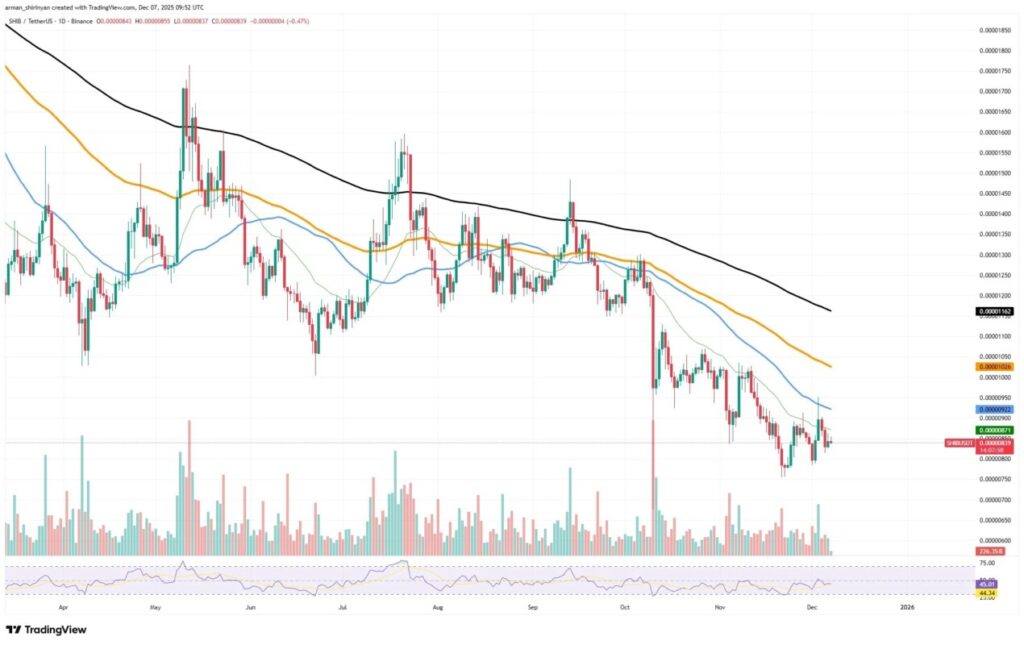
SHIB Price Movement Analysis
On the basis of analysis, SHIB shows routine price movements without significant volatility or liquidity disruptions. SHIB is still below all major moving averages. Typically, when trillions of tokens actually hit exchanges, there will be spread expansion and volatile candles, or at least a noticeable liquidity reaction.
However, that was not the case here. Trading volumes remained modest and prices did not show any reaction. This suggests that the market did not incorporate the trillions in new short supply.
Also Read: 5 Important Facts from Bitcoin’s (BTC) Latest Prediction: US$125,000 Target?
Exchange Metrics and Fund Flow
Although there was a spike in exchange inflows and outflows, the numbers were not as large as the reported figures.
Theoretically, the total inflow and outflow are 24.4 trillion SHIB and 25.2 trillion SHIB, however, the chart shows inconsistent vertical spikes that are more likely due to API errors, consolidation activities, or double-counted movements than market-driven transactions.
When inflow and outflow print extreme values simultaneously, it usually indicates internal wallet reorganization or problems in data classification.
Possible Causes and Implications
Exchange reserves have not changed much and the number of active addresses is also stable. There is no evidence to support the idea that tens of trillions of tokens are being withdrawn or dumped in a way that affects price discovery.
Therefore, the most plausible explanation is an internal wallet reorganization of the exchange that is either misclassified as a transactional flow, an indexation bug, or an incorrectly reported on-chain value. The figure of 23.56 trillion SHIB in 24 hours should be considered a statistical outlier rather than a significant change in Shiba Inu’s market structure until confirmed by multiple analytical sources.
Conclusion
Considering all the evidence and analysis, it is highly likely that the reported movement of 23.56 trillion SHIB is the result of a data error or anomaly. Investors and market watchers should wait for further confirmation before making any conclusions regarding its impact on the market.
Also Read: 10 Ways to Learn Crypto from Zero: Basic Guide to Start Investing Safely
Follow us on Google News to get the latest information about crypto and blockchain technology. Check Bitcoin price today, Solana price today, Pepe coin and other crypto asset prices through Pintu Market.
Enjoy an easy and secure crypto trading experience by downloading Pintu crypto app via Google Play Store or App Store now. Also, get a web trading experience with various advanced trading tools such as pro charting, various types of order types, and portfolio tracker only at Pintu Pro.
*Disclaimer
This content aims to enrich readers’ information. Pintu collects this information from various relevant sources and is not influenced by outside parties. Note that an asset’s past performance does not determine its projected future performance. Crypto trading activities are subject to high risk and volatility, always do your own research and use cold hard cash before investing. All activities of buying andselling Bitcoin and other crypto asset investments are the responsibility of the reader.
FAQ
Q1: What is Shiba Inu (SHIB)?
A1: Shiba Inu is a cryptocurrency that is often considered an alternative to Dogecoin , and is one of the tokens based on Ethereum .
Q2: How many SHIBs are reported to have moved?
A2: Reports show that 23.56 trillion SHIBs have moved within 24 hours.
Q3: What are the potential causes of this large movement?
A3: Potential causes of this movement could be internal wallet reorganization, data classification errors, or indexation bugs.
Q4: Is there any tangible impact on SHIB prices from this movement?
A4: No, there is no significant price reaction seen in the market, which suggests that this movement may not be the result of an actual market transaction.
Q5: What should SHIB investors do now?
A5: Investors are advised to wait for further confirmation of the veracity of this data before making investment decisions based on this information.
Reference
- U.Today. Extreme Shiba Inu Anomaly or On-Chain Error: 23,561,900,000,000,000 SHIB in 24 Hours. Accessed on December 8, 2025