
Download Pintu App

Crypto API: The Invisible Infrastructure Behind the Digital Asset World

Jakarta, Pintu News – In the fast-paced world of crypto, behind every app, trading bot, and on-chain analysis lies one fundamental technology: Crypto APIs. While not always visible to users, APIs (Application Programming Interface) are the key link that keeps various systems integrated and running smoothly.
What is a Crypto API and Why is it Important?
A crypto API is an application programming interface that allows a single platform-such as a mobile app, website, or analytics tool-to interact directly with a blockchain, exchange, or other data service. In other words, APIs are the middlemen between user applications and complex crypto data sources.
Through APIs, developers can access real-time price data, monitor wallet balances, run automated trades, or read transaction data from the blockchain-without having to build infrastructure from scratch. This is what makes Crypto APIs the backbone of many crypto services today.
Also Read: A Complete Guide to Saving Digital Gold in 2025 – Simple, Safe, Can Start from Rp11,000!
How Crypto API Works
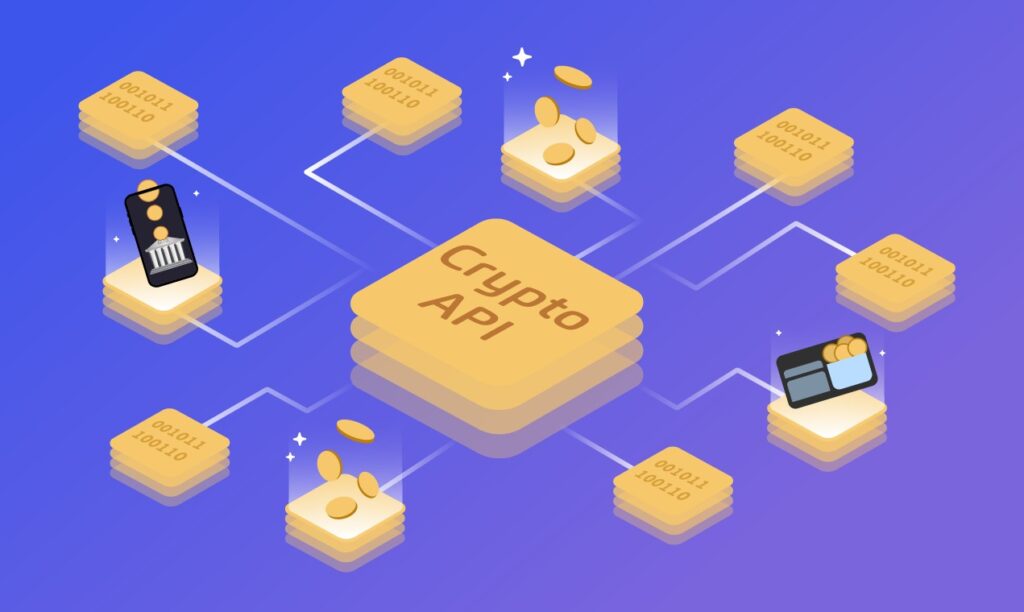
The Crypto API works through a simple yet powerful flow:
- Request: The application sends a request to the API endpoint, for example to retrieve the latest Bitcoin price.
- Authentication: Most APIs require an API key as authentication to prevent misuse.
- Response: The API processes the request and returns data in a structured format (usually JSON or XML).
- Integration: This data is used to update the app interface, trigger bot actions, or display graphics.
Some APIs are public (e.g. market price data), while others are private (e.g. wallet balance check), and require stronger authentication.
Types of Crypto APIs and their Use Cases
Crypto APIs come in many forms for a variety of needs, including:
- Market Data API: Provides real-time prices, trading volumes, and order books from various exchanges.
- Blockchain API: Access transaction data, wallet balance, and on-chain confirmation status.
- Trading API: Automate the buying/selling of digital assets.
- Wallet API: Manage wallets, create new addresses, or monitor balances.
- Analytics & AI API: Provides machine learning-based signaling and deep analytical insights.
Token Metrics, for example, combines traditional market data with artificial intelligence to generate API-based analysis and trading signals.
The Technology Behind Crypto API
Most Crypto APIs are RESTful, utilizing standard HTTP methods such as GET and POST. However, for real-time use cases (e.g. price streaming), WebSockets or gRPC are used for low latency.
Authentication and security are prioritized. Trusted API providers use HTTPS, API keys, IP whitelisting, and request restrictions to maintain system integrity and user data.
Advantages of Using Crypto API
For both developers and users, the Crypto API offers a variety of benefits:
- Efficiency: Access complex data without having to build your own blockchain server or node.
- Flexibility: Personalize views, alerts, and AI integration with real-time data.
- Scalability: Easily add new features or connections to exchanges.
- Innovation: Paving the way for DeFi apps, trading bots, portfolio analytics, and more use cases.
However, users should pay attention to other important aspects such as:
- Reliability: A slow or frequently failing API can be detrimental.
- Security: Keep API keys safe and use permissions sparingly.
- Regulations: Ensure that the API used is compliant with local regulations.
- Price: Some APIs are free, but advanced features are usually paid.
Conclusion
Crypto APIs may not always be visible to end-users, but they are crucial to the viability of many crypto services. From analytics to automated trading, from wallets to tokenization, APIs are the digital infrastructure that allows the crypto world to thrive. By understanding and choosing the right APIs, developers and industry players can build more reliable, efficient, and innovative products.
Also Read: Cardano Predicted to Drop Out of Top 20 by 2026, Nansen CEO Mentions ‘Ghost Chain’
Follow us on Google News to get the latest information about crypto and blockchain technology. Check Bitcoin price today, Solana price today, Pepe coin and other crypto asset prices through Pintu Market.
Enjoy an easy and secure crypto trading experience by downloading Pintu crypto app via Google Play Store or App Store now. Also, get a web trading experience with various advanced trading tools such as pro charting, various types of order types, and portfolio tracker only at Pintu Pro.
*Disclaimer
This content aims to enrich readers’ information. Pintu collects this information from various relevant sources and is not influenced by outside parties. Note that an asset’s past performance does not determine its projected future performance. Crypto trading activities are subject to high risk and volatility, always do your own research and use cold hard cash before investing. All activities of buying andselling Bitcoin and other crypto asset investments are the responsibility of the reader.
FAQ: Crypto APIs
1. What is Crypto API?
Crypto API (Application Programming Interface) is a system that allows applications or platforms to communicate directly with blockchains, crypto exchanges, or other data providers. This API is used to automatically retrieve price data, execute transactions, monitor wallets, and many other functions.
2. Who uses Crypto API?
The Crypto API is used by developers of crypto applications, trading platforms, automated trading bots, blockchain analytics services, digital wallets, and crypto DeFi and AI projects. Even individual users can access the API for research or experimentation.
3. Are Crypto APIs safe to use?
Yes, as long as users and API providers follow security standards such as encryption (HTTPS), authentication using API keys, IP whitelisting, and proper authorization. APIs provided by trusted platforms generally have strict security protocols.
4. Are all Crypto APIs free?
Not all. Many providers offer a free tier with restrictions on the number of requests or limited features. For advanced access, such as historical data, AI signals, or high real-time performance, a paid subscription is usually required.
5. What is the difference between Public API and Private API in crypto?
- Public APIs are typically used to retrieve general market data, such as price, volume, and token information.
- Private APIs require additional authentication as they access sensitive data such as wallet balance, transaction history, or order execution.
6. Can the Crypto API be used without programming experience?
Most uses of Crypto API require basic programming knowledge. However, some platforms provide a visual interface (GUI), SDK, or integration with tools like Google Sheets, which allows non-programmers to utilize it as well.
7. Which platforms provide the best Crypto APIs?
Some popular Crypto API providers include:
- Token Metrics (with AI features & trading signals)
- CoinGecko & CoinMarketCap (market data)
- Alchemy & QuickNode (blockchain infrastructure)
- Binance API & Coinbase API (trading & wallet)
8. What are the risks of using Crypto API in my application?
Risks include downtime, inaccurate data, API key leaks, or service policy violations. It is important to choose a reliable provider, pay attention to rate limits, and manage credentials carefully.
Reference:
- Token Metrics Team. Understanding Crypto APIs: How They Power Digital Asset Applications. Accessed November 25, 2025
Berita Terbaru
© 2026 PT Pintu Kemana Saja. All Rights Reserved.
Kegiatan perdagangan aset crypto dilakukan oleh PT Pintu Kemana Saja, suatu perusahaan Pedagang Aset Keuangan Digital yang berizin dan diawasi oleh Otoritas Jasa Keuangan serta merupakan anggota PT Central Finansial X (CFX) dan PT Kliring Komoditi Indonesia (KKI). Kegiatan perdagangan aset crypto adalah kegiatan berisiko tinggi. PT Pintu Kemana Saja tidak memberikan rekomendasi apa pun mengenai investasi dan/atau produk aset crypto. Pengguna wajib mempelajari secara hati-hati setiap hal yang berkaitan dengan perdagangan aset crypto (termasuk risiko terkait) dan penggunaan aplikasi. Semua keputusan perdagangan aset crypto dan/atau kontrak berjangka atas aset crypto merupakan keputusan mandiri pengguna.