
Download Pintu App

5 Things About Crypto Bubble: Why is it such a buzzword?

Jakarta, Pintu News – The crypto bubble phenomenon is often one of the most discussed terms in the cryptocurrency world, especially when the price of digital assets soars rapidly beyond its fundamental value.
According to CoinMarketCap’s explanation, a crypto bubble occurs when the price of an asset is traded far in excess of its intrinsic value. In the context of crypto, the term often arises when the market experiences an extreme run-up, followed by a sharp correction as expectations are not matched by real utility.
1. What is a “Bubble” According to CoinMarketCap
According to CoinMarketCap, a crypto bubble is a condition where the price of an asset rises far above its intrinsic value due to market speculation. This phenomenon can occur in a variety of financial instruments, including stocks, property, and cryptocurrencies. In the crypto market, crypto bubbles are often associated with price spikes that are not driven by technological fundamentals or adoption rates.
CoinMarketCap explains that many observers consider some crypto price increases to be a form of bubble. This is due to the gap between the market value and real utility of digital assets, especially at the early adoption stage. This often leads to large price corrections when sentiment changes.
Also Read: 3 Stock Sectors Predicted to be Bought by Investors When the Technology Sector Weakens
2. Why the Crypto Market is Often Called a Bubble
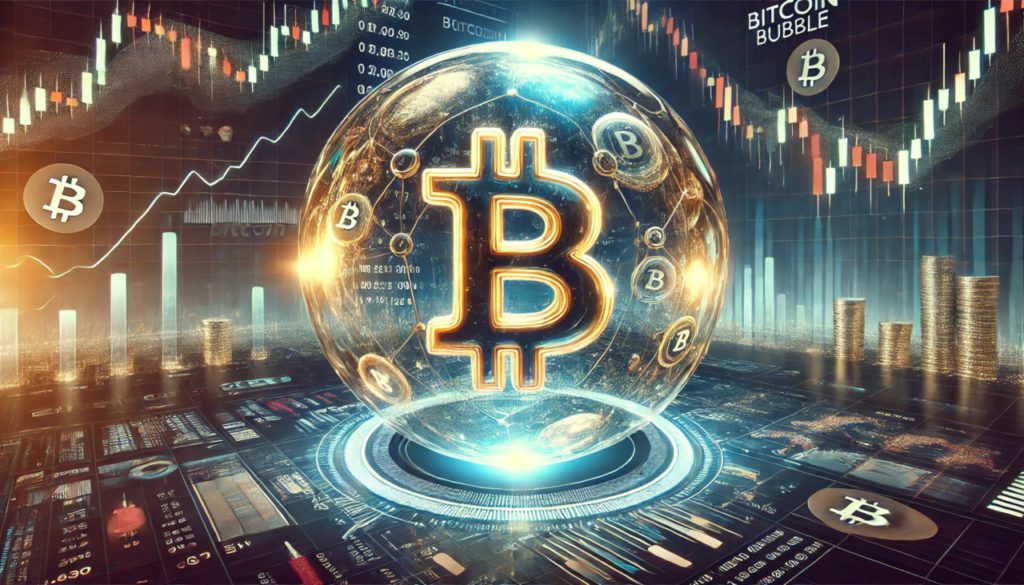
In 2018, concerns about the crypto bubble reached a peak when the market capitalization of all cryptocurrencies surged close to $800 billion. According to a report by CoinMarketCap, this value is considered difficult to evaluate due to the difficulty of determining the intrinsic value of digital assets. Markets often move based on expectations and speculation, resulting in increased volatility.
Skepticism is rising due to the low adoption rate of crypto in the real economy. CoinMarketCap pointed out that the use of Bitcoin (BTC) as a means of payment is still limited, so some see the price of BTC as a reflection of speculation, not utility.
3. Skepticism vs Optimism: Two Views on the Crypto Bubble
According to CoinMarketCap, skeptics believe that many cryptocurrencies have a fundamental value close to zero. This view stems from the assumption that technology adoption is still low and not proportional to market valuations. This condition is the basis for many analysts to call crypto a speculative asset that can easily trigger a bubble.
However, this view is rejected by the crypto community who see blockchain technology continuing to evolve. CoinMarketCap asserts that the growth of sectors like decentralized finance (DeFi) is evidence of real utility taking shape. Ecosystems like Ethereum (ETH) are even becoming the basis for thousands of decentralized finance applications.
4. Important Example: Ethereum and the Rise of DeFi
Ethereum is cited by CoinMarketCap as a prime example of how crypto can have real utilization value. In addition to being a digital asset, Ethereum serves as a network that supports smart contracts, decentralized applications, and alternative financial services. With these utilities, the value of ETH is considered easier to evaluate than other speculative assets.
In addition, the rise of DeFi is an indicator of the increasing use of blockchain for financial functions such as lending, asset exchanges, and insurance. CoinMarketCap considers that this growth shows that not all crypto price increases can be equated with a bubble.
5. Will the Crypto Bubble Happen Again?
CoinMarketCap explains that while some phases of the crypto market exhibit bubble characteristics, not all price trends move as a result of speculation alone. The ever-evolving technology makes crypto’s utility more apparent over time. Price spikes can occur due to a combination of innovation, adoption, and sentiment.
However, the risk of a bubble remains as crypto volatility is very high and often influenced by market psychological factors. Therefore, understanding the concept of a bubble is important to assess whether price spikes are backed by fundamentals or are merely momentary speculation.
Also Read: 4 Key Risks of Cardano (ADA) in December 2025 that Crypto Investors Should Monitor
Follow us on Google News to get the latest information about crypto and blockchain technology. Check Bitcoin price today, Solana price today, Pepe coin and other crypto asset prices through Pintu Market.
Enjoy an easy and secure crypto trading experience by downloading Pintu crypto app via Google Play Store or App Store now. Also, get a web trading experience with various advanced trading tools such as pro charting, various types of order types, and portfolio tracker only at Pintu Pro.
*Disclaimer
This content aims to enrich readers’ information. Pintu collects this information from various relevant sources and is not influenced by outside parties. Note that an asset’s past performance does not determine its projected future performance. Crypto trading activities are subject to high risk and volatility, always do your own research and use cold hard cash before investing. All activities of buying andselling Bitcoin and other crypto asset investments are the responsibility of the reader.
FAQ
What is the definition of a bubble in crypto?
A bubble is a condition where the price of a crypto asset is far above its intrinsic value, according to CoinMarketCap’s definition.
Has Bitcoin ever been considered a bubble?
Yes. In 2018, Bitcoin was often referred to as a bubble due to extreme price spikes with limited adoption.
Why is crypto often associated with bubbles?
Due to high volatility, strong market speculation, and difficulty determining the intrinsic value of digital assets.
Are all crypto price increases a bubble?
It doesn’t. CoinMarketCap asserts that real utilities like DeFi show that some assets have fundamental value.
Could the crypto bubble impact global markets?
Large bubbles can trigger significant corrections that impact investors and the digital finance market at large.
Reference
- CoinMarketCap Academy. Bubble. Accessed December 2, 2025
Berita Terbaru
© 2026 PT Pintu Kemana Saja. All Rights Reserved.
Kegiatan perdagangan aset crypto dilakukan oleh PT Pintu Kemana Saja, suatu perusahaan Pedagang Aset Keuangan Digital yang berizin dan diawasi oleh Otoritas Jasa Keuangan serta merupakan anggota PT Central Finansial X (CFX) dan PT Kliring Komoditi Indonesia (KKI). Kegiatan perdagangan aset crypto adalah kegiatan berisiko tinggi. PT Pintu Kemana Saja tidak memberikan rekomendasi apa pun mengenai investasi dan/atau produk aset crypto. Pengguna wajib mempelajari secara hati-hati setiap hal yang berkaitan dengan perdagangan aset crypto (termasuk risiko terkait) dan penggunaan aplikasi. Semua keputusan perdagangan aset crypto dan/atau kontrak berjangka atas aset crypto merupakan keputusan mandiri pengguna.