
Download Pintu App

5 Ways to Tell Whether Gold Is Real or Fake
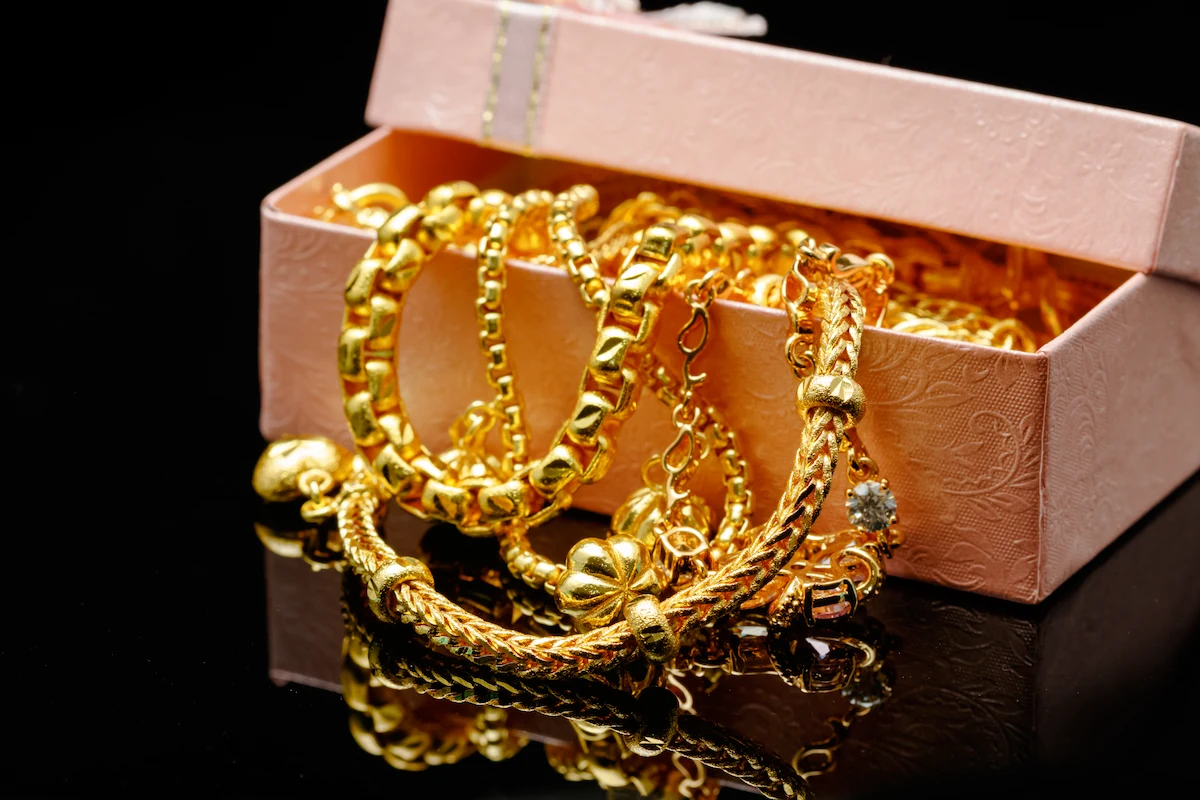
Jakarta, Pintu News – The rising price of gold in the past year has made many people turn to gold bars and jewelry as a hedging tool. Unfortunately, this condition is also utilized by unscrupulous people who sell fake gold or low-grade gold at prices as if it were pure gold.
Understanding the basics of how to distinguish between real and fake gold is important, especially for retail buyers who transact outside of large gold shops or authorized platforms. Here are five practical ways commonly recommended by experts and metal testing institutions, which can serve as an initial guide before deciding to buy or sell gold.
1. Check Physical Characteristics, Rate Stamp, and Certificate
The simplest first step is to check the physical characteristics of the gold, especially the hallmark and certificate. Real gold sold by authorized producers usually has a clear hallmark, such as 24K, 23K, 22K, or 999/9999 for pure gold.
These stamps are generally neatly printed, well-proportioned, and in a consistent position, such as the inside of a ring or the back of a pendant. If the stamp appears blurred, asymmetrical, or atypical, this is a cause for concern.
In addition to the stamp, a certificate from a trusted institution is an important indicator for gold bars. Products such as Antam gold, UBS, or other certified precious metals are usually accompanied by a certificate card with the same serial number engraved on the gold bar.
Certificates state the weight, grade and authenticity of the product, and often include security features such as holograms. While certificates can still be forged, their existence greatly facilitates the verification process at gold shops or authorized financing institutions.
2. Weight and Dimension Test with Scales and Ruler
Gold has a high density, so for certain physical measurements it will feel heavier than other metals. A simple way that is often suggested is to weigh the gold with an accurate digital scale and compare the results with the manufacturer’s official specifications.
A 1 gram or 5 gram bar, for example, should not have a significant weight difference from the standard stated on the certificate. A large difference could indicate that there is too much other metal mixed in.
Besides weight, the physical dimensions – length, width, and thickness – can also give you a clue. Official manufacturers usually have consistent size standards for each piece. Some recent consumer guides emphasize that counterfeit gold bars are sometimes deliberately made slightly thicker or larger to make them weigh closer to the standard despite the mix of cheap metals in them. Measuring and comparing dimensions against official references from manufacturers’ websites can reduce the risk of being fooled.
3. Use Magnetism and Sound Tests Carefully
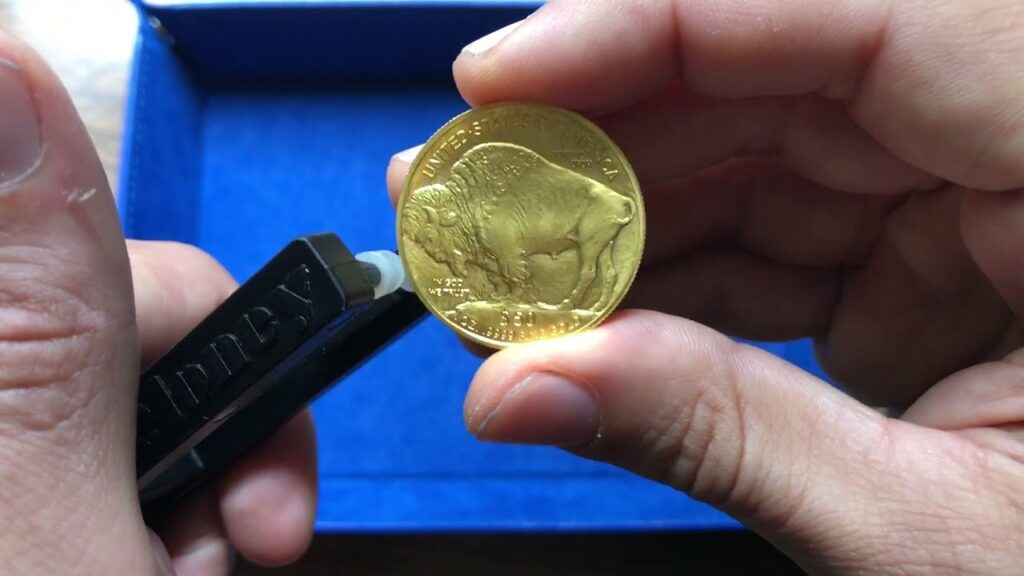
Real gold is non-magnetic, so it will not be attracted by strong magnets such as neodymium magnets. Many gold safety guides recommend that consumers carry a small magnet with them when shopping as an initial test.
If the “gold” you are holding is immediately attracted strongly, it is likely that there is a significant mixture of ferromagnetic metals in it. However, high-quality counterfeit gold sometimes uses non-magnetic metals as an admixture, so passing a magnetic test does not mean it must be genuine.
Read also: Why is Antam’s Gold Stock Empty?
In addition to magnets, some traditional testers use a “sound test” by tapping gold with other metals and listening to the tone. High-grade gold tends to produce a clear, resonant sound, while mixed metals often sound shorter and duller.
However, this method is quite subjective and requires experience to distinguish subtle differences. Therefore, the magnetic and sound tests should be used as an initial indicator, not the sole determinant.
4. Utilize Professional Testing Services: XRF, Acid, and Lab
For greater certainty, precious metals experts recommend professional testing at a major gold shop, pawnshop or testing laboratory. Many authorized outlets now use X-Ray Fluorescence (XRF) equipment that can read metal composition non-destructively in seconds.
With this tool, the gold content (e.g. 99%, 91.6%, or 75%) can be determined without scratching or damaging the surface. The test results are usually displayed as a digital report with the percentage of metal elements in the sample.
Besides XRF, there are traditional methods such as the acid test, which uses a special liquid to see the reaction of the gold surface. This method is relatively inexpensive and widely used, but it is not recommended for fine jewelry as it has the potential to leave marks.
Some laboratories also offer density testing and destructive testing for disputed or high-value cases, such as large gold bars or investment collections. Utilizing these professional services is highly recommended when dealing with large sums or having doubts about the origin of goods.
Read also: 25 Gram Gold Price in 2026
5. Buy on Authorized Channels and Beware of “Too Cheap” Prices
The most important tip that industry players keep repeating is to buy gold from official and trusted channels. In Indonesia, the general recommendation is to buy through precious metal boutiques, Pegadaian, certain banks, or reputable gold shops.
Online buying and selling platforms can also be used, but make sure the marketplace and seller have a good track record, positive reviews and a clear return policy. Many cases of counterfeit gold originate from transactions outside official channels, such as through social media or private offers without proof.
Another important indicator is to be aware of prices that are too low compared to market prices. If the price is far below the daily benchmark – for example, a difference of hundreds of thousands of rupiah per gram from the Antam gold price or the price of gold jewelry in large stores – then there is most likely something unusual.
Fraudsters often take advantage of consumers’ ignorance by providing narratives of “need money fast” or “special price today only”. Knowing the daily gold price range before transacting is a simple step to avoid such pitfalls.
Conclusion
Spotting real or fake gold requires a combination of physical observation, simple tests, and if necessary professional testing. Check grade stamps and certificates, compare weights and dimensions, use magnetic and sound tests carefully, and don’t hesitate to utilize XRF or laboratory services if the transaction value is large.
Above all, buying gold from authorized channels and not being tempted by below-market prices remains the main shield against fraud. With these measures in place, buyers can rest easy about utilizing gold as a hedging instrument amidst changing market dynamics.
Gold-Based Crypto: When Physical Assets Meet Crypto Technology
As blockchain technology develops, gold can now be owned not only in physical form such as jewelry or bars, but also in digital form through gold-based crypto assets.
One of the most popular is Tether Gold (XAUt), a physical gold-backed ERC-20-based stablecoin, where 1 token represents 1 troy ounce of pure gold. The gold is stored in vaults in Switzerland and each token is directly linked to certified gold bullion. The system uses automated algorithms to efficiently manage the allocation of gold and Ethereum addresses.
XAUt tokens are available and traded on various crypto exchanges. XAUt is also an attractive alternative for those looking to hedge against inflation or global economic uncertainty, while remaining within the digital asset ecosystem.
Follow us on Google News to stay up to date with the latest crypto and blockchain technology. Check Bitcoin price, usdt to idr and tokenized nvidia stock price through Pintu Market.
Enjoy an easy and secure crypto trading experience by downloading the Pintu crypto app via Play Store or App Store now. Also, experience web trading with advanced trading tools such as pro charting, various order types, and portfolio tracker only at Pintu Pro.
*Disclaimer
This content aims to enrich readers’ information. Pintu collects this information from various relevant sources and is not influenced by outside parties. Note that an asset’s past performance does not determine its projected future performance. Crypto trading activities are subject to high risk and volatility, always do your own research and use cold hard cash before investing. All activities of buying and selling Bitcoin and other crypto asset investments are the responsibility of the reader.
Reference:
- Pegadaian. 10 Ways to Tell if Gold is Real or Fake! Accessed February 7, 2026
- Gallery24. Recognize the authenticity of the gold you buy! Accessed February 7, 2026
- Featured Image: Generated by AI
Berita Terbaru
© 2026 PT Pintu Kemana Saja. All Rights Reserved.
Kegiatan perdagangan aset crypto dilakukan oleh PT Pintu Kemana Saja, suatu perusahaan Pedagang Aset Keuangan Digital yang berizin dan diawasi oleh Otoritas Jasa Keuangan serta merupakan anggota PT Central Finansial X (CFX) dan PT Kliring Komoditi Indonesia (KKI). Kegiatan perdagangan aset crypto adalah kegiatan berisiko tinggi. PT Pintu Kemana Saja tidak memberikan rekomendasi apa pun mengenai investasi dan/atau produk aset crypto. Pengguna wajib mempelajari secara hati-hati setiap hal yang berkaitan dengan perdagangan aset crypto (termasuk risiko terkait) dan penggunaan aplikasi. Semua keputusan perdagangan aset crypto dan/atau kontrak berjangka atas aset crypto merupakan keputusan mandiri pengguna.