
Download Pintu App

5 Crazy Facts! Stablecoins transact Rp179 Quadrillion a Month, World Banking at Risk?
Jakarta, Pintu News – The world of institutional finance is undergoing a massive paradigm shift away from slow, traditional banking systems towards the efficiency of blockchain technology. For decades, the settlement of transactions between organizations relied on correspondent banking that took one to three days and was closed on weekends.
However, the advent of stable cryptocurrencies or stablecoins has changed everything by providing a layer of settlement that operates 24/7. You can now see how giants like Visa and JPMorgan are abandoning legacy infrastructure in favor of the speed offered by the crypto world.
1. Stablecoin Transaction Volume Surpasses Visa and Mastercard
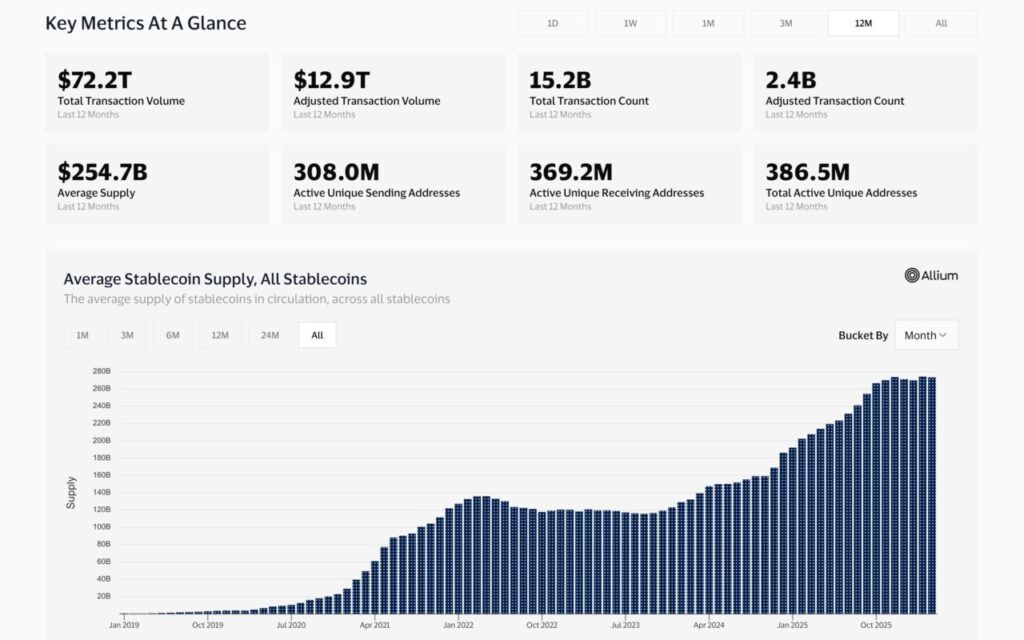
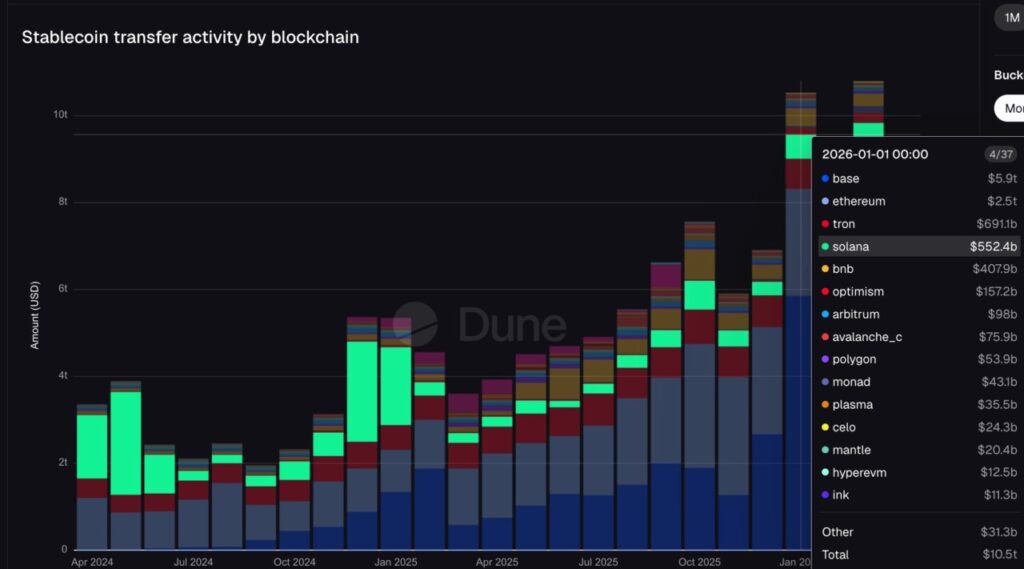
The transaction volume of stablecoins has reached fantastic heights and is starting to rival established global payment networks. By 2025 alone, stablecoins are moving $33 trillion in total assets, which is double Visa’s annual payment volume. This growth trend is vertical, especially after the passage of the GENIUS Act in the United States in mid-2025, which opened the door for widespread institutional adoption.
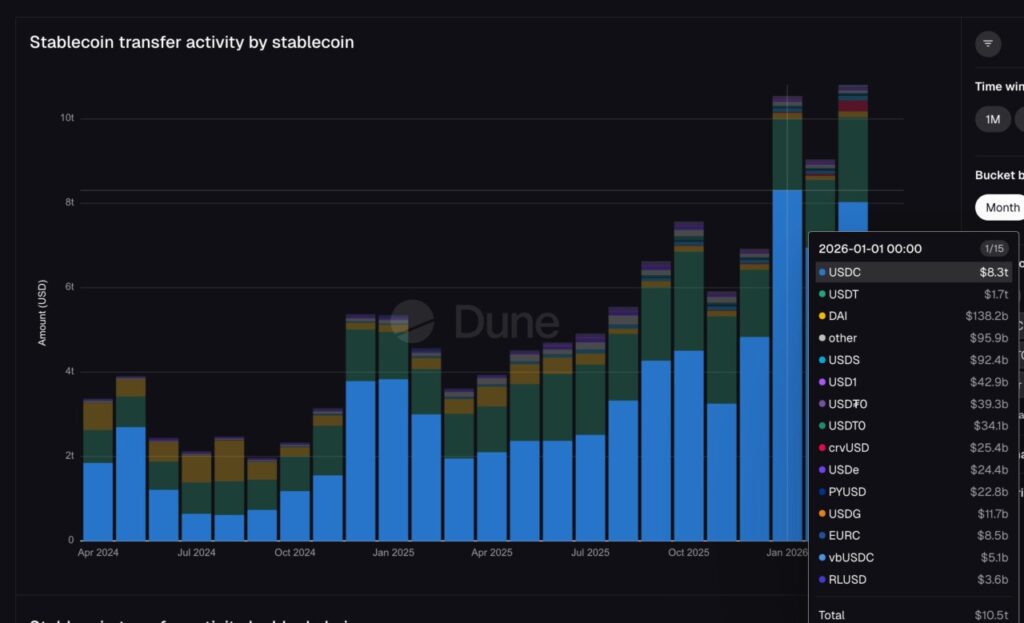
- January 2026: Stablecoin transactions reach $10.5 trillion or around Rp179.5 quadrillion in one month alone.
- Comparison: The one-month figure is close to Mastercard’s annual gross dollar volume of $10.6 trillion.
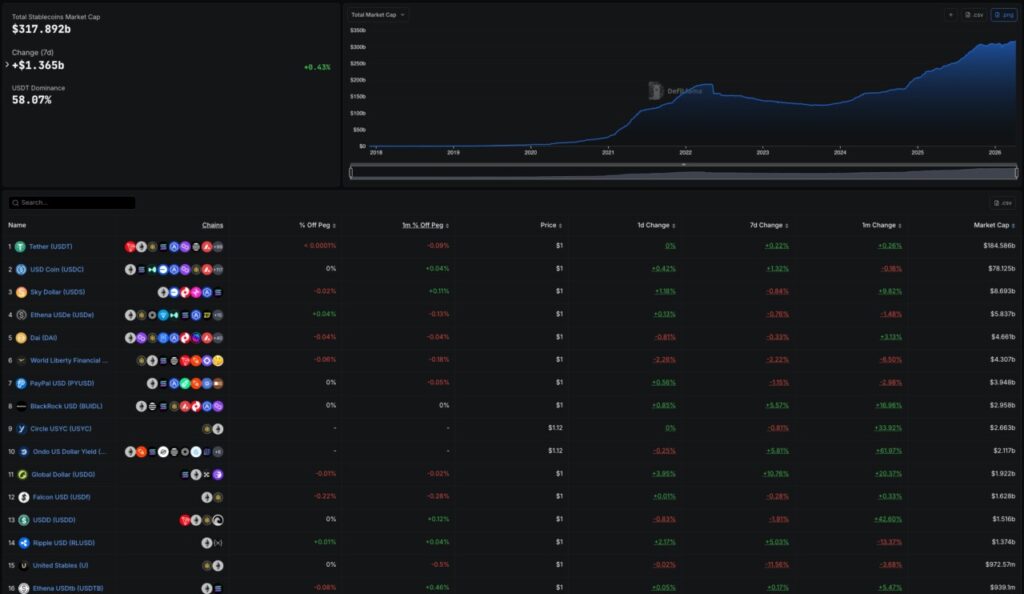
- Market Capitalization: The total market cap of stablecoins reached $317.89 billion or IDR5,436 trillion as of April 2026.
- Movement Domination: USD Coin (USDC) moved $8.3 trillion, far outperforming Tether (USDT) which moved $1.7 trillion in the same period.
Also Read: 10 Free AI Apps 2026, Can Help Passive Income from Crypto to Stocks
2. Infrastructure Centralized on Two Giants: Circle and Paxos
While the cryptocurrency ecosystem is vast, the institutional stablecoin infrastructure is surprisingly concentrated on just two major issuers. Circle and Paxos are the behind-the-scenes actors that mint the stable coins used by big names on Wall Street. Circle is responsible for USDC, which dominates transaction movements, while Paxos mints coins for major partners like PayPal and the Global Dollar network.
You should understand that the system works on a mint and burn mechanism that occurs at the direct request of institutional clients. Data shows that Paxos has channeled over $89.2 billion through thousands of transactions to exchanges and market makers. This operational scale shows that stablecoins have become the ultimate settlement rail replacing the role of complex correspondent banking chains.
3. Flash Distribution Through Big Players Without the Role of Banks
Settling transactions using stablecoins allows financial institutions to bypass traditional banking channels that are often hampered by bureaucracy and operating hours. Issuers of stablecoins channel their liquidity through digital distributors such as Coinbase, Wintermute, and Jane Street. These are the entities that bridge the gap between the traditional financial world (TradFi) and today’s blockchain technology.
- Major Recipients of Paxos: Binance ($22 billion), Wintermute ($12.77 billion), and Jane Street ($6 billion).
- Circle interaction: Coinbase became a major distribution partner with billions of dollars worth of print and redeem activity.
- Speed: This on-demand cycle is not found in traditional banking, allowing transactions to be completed in seconds.
4. Asset Security Depends on a Trusted Crypto Custodian
The security of a stablecoin’s infrastructure depends not only on who mints it, but also where the assets are stored between minting and redemption. Fireblocks has emerged as a major custodian provider at the intersection of Mastercard’s settlement rail through Global Dollar (USDG) and Visa’s rail through USDC. This concentration on crypto custodian providers demonstrates the depth of institutions’ reliance on digital security technology.
Fireblocks holds around 8.97% of the total USDG coin supply, which makes it the largest single holder for the institutional network. Apart from Fireblocks, exchanges like OKX and Kraken also hold a large portion in their cold wallets to keep assets safe. This proves that the global fund settlement ecosystem now relies heavily on a handful of cryptocurrency infrastructure providers that have high-level security standards.
5. Aggressive Strategies from Visa, Mastercard, to JPMorgan
Each major player in the financial world has a different strategy for integrating stablecoins into their core business, but they all use the same basic infrastructure. Visa has committed most strongly by settling $3.5 billion annually in USDC through its Solana network. Meanwhile, giants like Stripe have opted to acquire $1.1 billion worth of infrastructure outright to strengthen their financial accounts in hundreds of countries.
- Visa: Supports USDC, PayPal USD (PYUSD), Global Dollar (USDG), and Euro Coin (EURC) on various chains such as Ethereum (ETH) and Solana.
- Mastercard: Enables four types of stablecoins including First Digital USD (FIUSD) through the Paxos network.
- PayPal: Launched PYUSD in 70 global markets registering up to $3.95 billion in supply.
- JPMorgan: Settled debt using USDC on the Solana network to improve operational efficiency.
This four-tier structure – issuance, distribution, custody and integration – now controls how institutional money moves around the world. The question now is, will the next wave of adoption diversify this dependency or deepen the concentration on a handful of infrastructure providers?
Also Read: 5 Ways to Buy Bitcoin as Easy as a $1 Million Gold Ring: A Crypto Guide for Beginners
Follow us on Google News to stay up to date with the latest in crypto and blockchain technology. Check Bitcoin price, usdt to idr and tokenized nvidia stock price via Pintu Market.
As a safe crypto app, Pintu provides a crypto trading experience to access crypto gold investment easily and conveniently. You can also see today ‘ s gold jewelry price and today ‘ s gold bullion price to support your investment activities and portfolio diversification as well as learn crypto through Pintu Academy.
*Disclaimer
This content aims to enrich readers’ information. Pintu collects this information from various relevant sources and is not influenced by outside parties. Note that an asset’s past performance does not determine its projected future performance. Crypto trading activities are subject to high risk and volatility, always do your own research and use cold hard cash before investing. All activities of buying and selling Bitcoin and other crypto asset investments are the responsibility of the reader.
Reference
- Ananda Banerjee/BeInCrypto. Who Really Runs the Stablecoin Settlement? A Structural Analysis. Accessed April 13, 2026.
Berita Terbaru
© 2026 PT Pintu Kemana Saja. All Rights Reserved.
Kegiatan perdagangan aset crypto dilakukan oleh PT Pintu Kemana Saja, suatu perusahaan Pedagang Aset Keuangan Digital yang berizin dan diawasi oleh Otoritas Jasa Keuangan serta merupakan anggota PT Central Finansial X (CFX) dan PT Kliring Komoditi Indonesia (KKI). Kegiatan perdagangan aset crypto adalah kegiatan berisiko tinggi. PT Pintu Kemana Saja tidak memberikan rekomendasi apa pun mengenai investasi dan/atau produk aset crypto. Pengguna wajib mempelajari secara hati-hati setiap hal yang berkaitan dengan perdagangan aset crypto (termasuk risiko terkait) dan penggunaan aplikasi. Semua keputusan perdagangan aset crypto dan/atau kontrak berjangka atas aset crypto merupakan keputusan mandiri pengguna.