
Download Pintu App

Vanguard Embraces Crypto: $9.3 Trillion Investment Platform Now Offers Access to BTC, ETH, XRP, and SOL ETFs
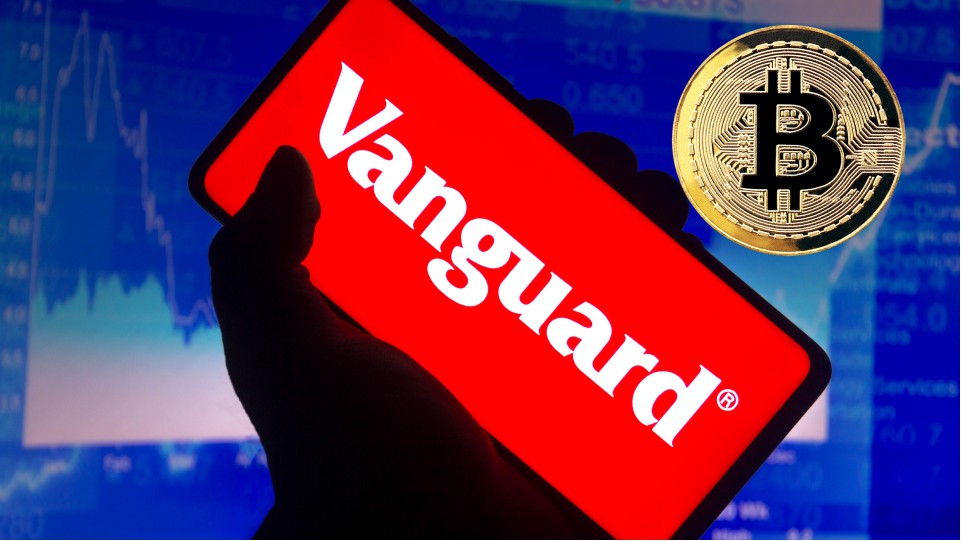
Jakarta, Pintu News – As of December 2, Vanguard will reportedly open its large brokerage platform for trading spot-based ETFs (Exchange-Traded Funds) of Bitcoin (BTC), Ethereum (ETH), XRP (XRP), and Solana (SOL).
This strategic move marks a major change from Vanguard’s previous stance of staying away from the digital asset market, which is valued at around US$3 trillion.
Vanguard opens the door to crypto ETFs
Over the years, Vanguard has been known as the major financial institution most resistant to involvement in crypto, arguing that the high volatility of digital assets goes against the principles of long-term investment and diversified portfolios.
Read also: Bitcoin Price Crawls Up to $92,000 Today: BTC Still at Risk of Decline?
As such, the decision to change this policy is considered one of the most significant forms of “surrender” from the traditional financial sector to the growth of the crypto economy.
However, Vanguard emphasized that they are sticking to their core philosophy of building investment products. This means that they will not create their own crypto ETF product.
In return, Vanguard will become an important link that allows its conservative customers to access crypto ETF products managed by others such as BlackRock Inc., Fidelity Investments, and Bitwise Asset Management.
In response to the significance of this change, Bitwise CEO, Hunter Horsley, highlighted the contrast between the magnitude of the policy change and the relatively calm market reaction – which he says shows that the crypto asset class is maturing.
He said:
“The second largest broker in America changed its policy from selling only to allowing the purchase of crypto ETFs. And no one is too excited. Whether people are enthusiastic or not at the moment – crypto is quickly coming into the mainstream.”
Why did Vanguard change its decision?
Vanguard has been adamant about banning crypto ETFs, even after the US Securities and Exchange Commission (SEC) approved a spot Bitcoin ETF in early 2024, followed by an Ethereum product shortly after.
The ban is based on Vanguard’s own internal guidelines and platform eligibility rules, which cite regulatory opacity and investor protection concerns.
However, the situation changed drastically due to a major shift in regulatory policy under the current US administration.
The SEC is now showing a more supportive attitude towards innovation. Plus, a number of court decisions over the past few years have effectively removed the legal uncertainty that Vanguard previously used as a reason to reject crypto.
In fact, the approval of spot crypto ETFs is now based on a robust legal framework – which includes surveillance-sharing agreements, custodial management and transparency standards. This framework was first applied to Bitcoin ETFs and has since been adopted for other products, resulting in much lower operational risk for brokers offering these products to retail investors.
Regulatory aspects aside, this decision is also a recognition of market realities that cannot be ignored. A recent study revealed that 35% of wealthy young people in the US have left their financial advisors because they were denied access to crypto.
For example, BlackRock’s iShares Bitcoin Trust (IBIT) became one of the fastest-growing ETFs in US history-suggesting that demand for crypto exposure has now moved from specialized trading platforms to mainstream asset managers.
To date, spot Bitcoin ETFs manage around $120 billion in assets, while Ethereum ETFs collectively account for almost $20 billion. New products that follow assets such as Solana and XRP are also starting to succeed due to high market demand.
In addition to regulatory factors and demand, Vanguard also faces competitive pressures. Many clients already hold crypto ETFs outside of the Vanguard platform, while keeping traditional investments at Vanguard.
This complicates processes such as tax planning and model portfolio management, as financial advisors have to arrange transactions through two different institutions.
Therefore, Vanguard has finally acknowledged that customers who want to access crypto ETFs should be able to do so directly through their main account at Vanguard – without having to move funds to another broker.
Read also: Solana Price Plunges 55% from Highest Peak – How Much Deeper Will SOL Fall?
Andrew Kadjeski, head of the investment and brokerage division at Vanguard, stated:
“Crypto ETFs and funds have been through various periods of market volatility and have continued to function as designed while maintaining liquidity. The administrative processes to support these funds have also evolved, and investor preferences continue to change.”
What Impact will this have on the Crypto ETF Market?

The immediate impact on ETF fund flows will largely depend on how Vanguard’s unique customer base responds. Although Vanguard manages more than $9.3 trillion in assets, the addressable market for these crypto ETF products is relatively limited – only self-directed brokerage accounts and individual retirement accounts (IRAs) are allowed to trade them.
Meanwhile, large institutions such as defined benefit plans and other collective funds are still generally prohibited from making allocations to crypto assets.
In addition, Vanguard’s clients have different behaviors than the active traders that have been driving the initial growth of crypto ETFs. The majority of Vanguard users prefer long-term passive index products, versus more speculative thematic or tactical funds.
Therefore, the initial allocation is expected to be relatively small. However, if only about 0.1% to 0.2% of eligible brokerage assets are allocated to crypto ETFs, this still translates to a potential initial fund flow worth several billion dollars-spread across Bitcoin, Ethereum, Solana, and XRP ETFs.
But what matters most is not how fast the money flows, but the character of the fund. Unlike the “aggressive” funds of hedge funds or the reactive flows of retail funds, the flows of Vanguard clients tend to be stable and not influenced by prices.
For example, in a standard portfolio like “60/40/1” (60% stocks, 40% bonds, 1% crypto), the automated system will keep the allocation on target. If the price of Bitcoin or Solana drops, the system will automatically buy more to keep the 1% weighting achieved.
This creates a structural “buy the dip” mechanism-which can help dampen volatility and improve the price floor in the long run.
In addition, wider distribution of these ETF products will usually increase market liquidity.
The entry of more stable and diversified trading volumes from Vanguard is expected to narrow the bid-ask spread, lower execution costs for all investors, and improve the efficiency of ETF arbitrage mechanisms-so that ETF prices can more quickly adjust to the price movements of the underlying asset.
In other words, while adoption may be slow and conservative, the impact could be huge. If just a fraction of Vanguard’s clients allocate 1% to 2% of their portfolios to crypto ETFs as a “satellite” position, it could already mean tens of billions of dollars in new demand for an organized and regulated crypto market.
That’s the latest information about crypto. Follow us on Google News to get the latest crypto news about crypto projects and blockchain technology. Also, learn crypto from scratch with complete discussion through Pintu Academy and stay up-to-date with the latest crypto market such as bitcoin price today, xrp coin price today, dogecoin and other crypto asset prices through Pintu Market.
Enjoy an easy and secure crypto trading experience by downloading Pintu crypto app via Google Play Store or App Store now. Also, get a web trading experience with various advanced trading tools such as pro charting, various types of order types, and portfolio tracker only at Pintu Pro.
*Disclaimer
This content aims to enrich readers’ information. Pintu collects this information from various relevant sources and is not influenced by outside parties. Note that an asset’s past performance does not determine its projected future performance. Trading crypto carries high risk and volatility, always do your own research and use cold hard cash before investing. All activities of buying and selling bitcoin and other crypto asset investments are the responsibility of the reader.
Reference:
- Cryptopolitan. Vanguard caves on crypto to retain clients as rivals win flows – opens $9.3T platform to crypto ETFs. Accessed on December 3, 2025
Berita Terbaru
© 2026 PT Pintu Kemana Saja. All Rights Reserved.
Kegiatan perdagangan aset crypto dilakukan oleh PT Pintu Kemana Saja, suatu perusahaan Pedagang Aset Keuangan Digital yang berizin dan diawasi oleh Otoritas Jasa Keuangan serta merupakan anggota PT Central Finansial X (CFX) dan PT Kliring Komoditi Indonesia (KKI). Kegiatan perdagangan aset crypto adalah kegiatan berisiko tinggi. PT Pintu Kemana Saja tidak memberikan rekomendasi apa pun mengenai investasi dan/atau produk aset crypto. Pengguna wajib mempelajari secara hati-hati setiap hal yang berkaitan dengan perdagangan aset crypto (termasuk risiko terkait) dan penggunaan aplikasi. Semua keputusan perdagangan aset crypto dan/atau kontrak berjangka atas aset crypto merupakan keputusan mandiri pengguna.