

Ethereum Gearing Up for 2026: Two Big Forks and a Network Scale Surge

Jakarta, Pintu News – In 2026, Ethereum (ETH) is slated to undergo some major changes that will transform the way this blockchain works. Two major forks, Glamsterdam and Heze-Bogota, along with a significant increase in Layer 1 (L1) capacity, are expected to bring increased efficiency and scalability. This article will explain what to expect from these changes and how they will affect Ethereum (ETH) users.
Glamsterdam: Separation of Block Makers and Proponents
The Glamsterdam fork, scheduled for mid-2026, will introduce several important Ethereum Improvement Proposals (EIPs). One of the key changes is Enshrined Proposer Builder Separation (ePBS), which will integrate block builder and proposer separation directly into the Ethereum (ETH) consensus layer. This is a development of Boost’s MEV solution that currently handles around 90% of blocks through a centralized relay.
This process not only increases trust in blockchain operations but also enables more efficient and transparent operations. With ePBS, Ethereum (ETH) aims to reduce reliance on off-protocol solutions and improve security and fairness in the block mining process. This is a big step towards stronger decentralization and fairer operations.
Also read: Silver price jumps sharply to $83.75 per ounce, what are the factors for the price increase?
Glamsterdam: Block Access List
In addition to ePBS, Glamsterdam will also introduce Block Access Lists (EIP-7928). While the name may sound controversial, its main purpose is to enable block processing in perfect parallel. This will increase efficiency in processing transactions and significantly reduce the time required for block confirmation.
By introducing these access lists, Ethereum (ETH) can more efficiently manage resources and ensure that transactions are processed quickly and securely. This is an important step in addressing the scalability issues that have long been a challenge for this blockchain. These improvements are expected to take Ethereum (ETH) to a new level in terms of performance and capacity.
Read also: Crypto Market Outlook at the End of 2025: Breakout or Breakdown?
Heze-Bogota and L2 Blob Target Improvement
After Glamsterdam, a second fork called Heze-Bogota will be implemented. This fork will continue several EIPs that were not included in Glamsterdam. One of the most anticipated EIPs is Fork-Choice Inclusion Lists (FOCIL), which has caused a lot of debate and was eventually delayed from the previous fork.
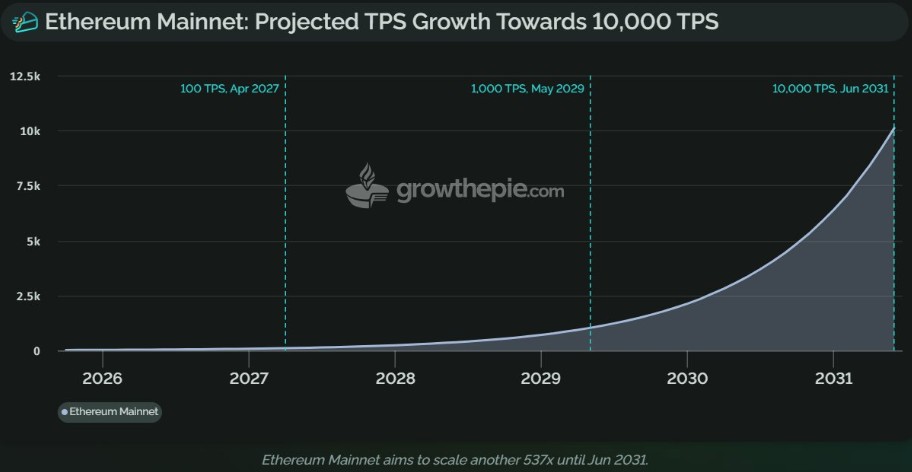
In addition, a significant increase in gas limits and the number of data blobs at Layer 1 (L1) is also scheduled. This will increase throughput substantially, with estimates that the gas limit could increase to 60 million. This increase will allow more transactions to be processed in less time, improving the overall efficiency of the network.
Conclusion
With the implementation of the Glamsterdam and Heze-Bogota forks and other upgrades in 2026, Ethereum (ETH) is set to become more efficient, scalable, and decentralized. These changes will not only improve the way the blockchain works but will also provide a better experience for users and developers. With the technology constantly evolving, the future of Ethereum (ETH) looks very promising.
That’s the latest information about crypto. Follow us on Google News to get the latest crypto news about crypto projects and blockchain technology. Also, learn crypto from scratch with complete discussion through Pintu Academy and stay up-to-date with the latest crypto market such as bitcoin price today, xrp coin price today, dogecoin and other crypto asset prices through Pintu Market.
Enjoy an easy and secure crypto trading experience by downloading Pintu crypto app via Google Play Store or App Store now. Also, get a web trading experience with various advanced trading tools such as pro charting, various types of order types, and portfolio tracker only at Pintu Pro.
*Disclaimer
This content aims to enrich readers’ information. Pintu collects this information from various relevant sources and is not influenced by outside parties. Note that an asset’s past performance does not determine its projected future performance. Crypto trading activities have high risk and volatility, always do your own research and use cold cash before investing. All activities of buying and selling bitcoin and other crypto asset investments are the responsibility of the reader.
Reference
- Cointelegraph. Ethereum 2026: Glamsterdam Hegota Fork Scaling. Accessed on December 30, 2025
- Featured Image: Decrypt
Latest News
© 2026 PT Pintu Kemana Saja. All Rights Reserved.
The trading of crypto assets is carried out by PT Pintu Kemana Saja, a licensed and regulated Digital Financial Asset Trader supervised by the Financial Services Authority (OJK), and a member of PT Central Finansial X (CFX) and PT Kliring Komoditi Indonesia (KKI). Crypto asset trading is a high-risk activity. PT Pintu Kemana Saja do not provide any investment and/or crypto asset product recommendations. Users are responsible for thoroughly understanding all aspects related to crypto asset trading (including associated risks) and the use of the application. All decisions related to crypto asset and/or crypto asset futures contract trading are made independently by the user.