

5 BTC History Facts February often bounces back after January slump!

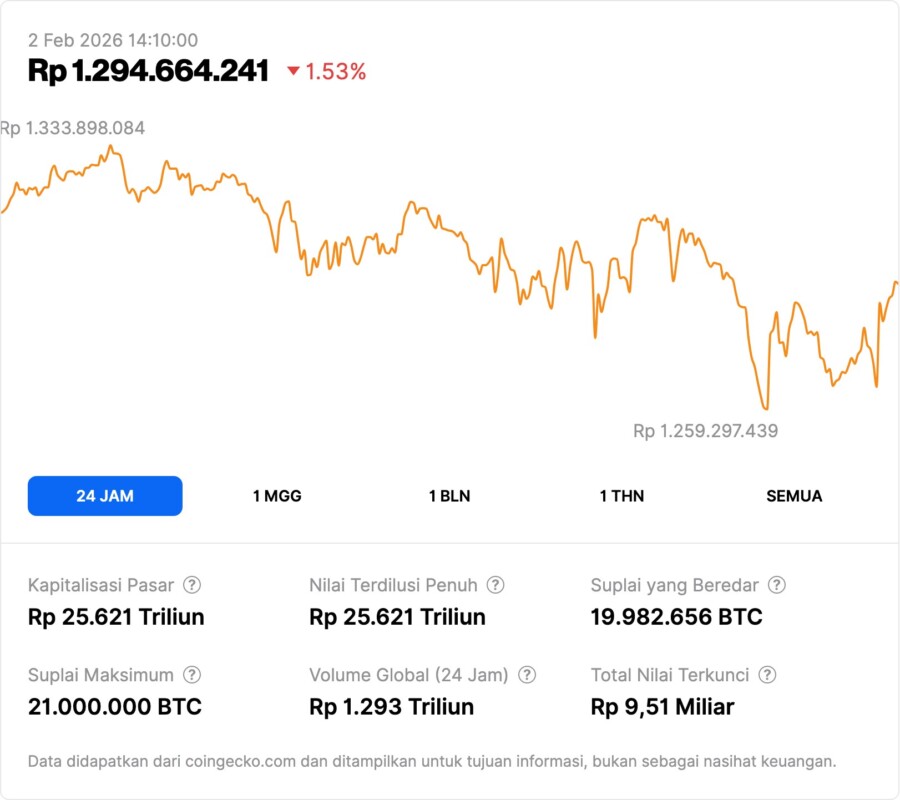
Jakarta, Pintu News – Bitcoin (BTC) recorded a significant drop of around 10.1% in January 2026, with prices hovering around USD 78 700 or around IDR 1.32 billion. However, historical data shows that February is often a statistically stronger period for BTC. This trend is relevant for young and novice investors who want to understand the seasonal dynamics in the crypto and cryptocurrency markets.
January’s Decline Doesn’t Always Set the Trend
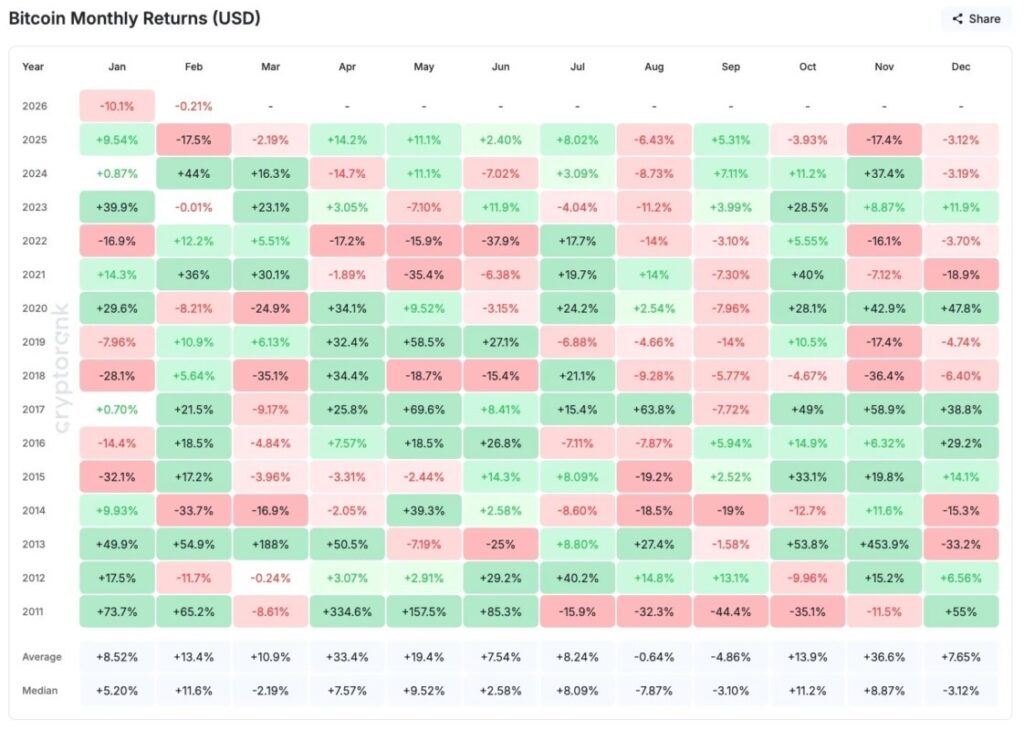
In recent years, Bitcoin has often experienced notable declines in January. Historical data shows that although BTC corrects sharply at the beginning of the year, the pattern does not always continue into the following period. Statistics from CryptoRank show that Bitcoin has recorded positive performance in February on many occasions.
Throughout the past 12 years, BTC has recorded a rise in February nine times out of 13 periods. This finding reflects that early-year declines are often followed by periods of rebound or price stabilization. For example, although January 2018 was negative, the following month still recorded an upward trend.
Also Read: 7 Ethereum (ETH) 2026 Price Predictions: Bullish Targets, Risks & Projections
February is Often a Month of Positive Performance
Bitcoin’s average return in February was among the best of the year. From historical data, this month has an average growth of around +13.4% and a median of around +11.6%. Only a few other months such as April and October showed higher average performance.
For young investors, this pattern shows that a short-term decline does not mean that the short-term trend will continue to go down. BTC’s price history tends to show a rebound movement in the month following a big drop. It’s important to understand this as a statistical perspective, not an absolute prediction.
BTC Rebound History Example
In previous years, November saw a deep January decline or correction, but then a significant rebound in February. For example, in certain years BTC recorded double-digit growth in February, even reaching around +36% in one period.
This phenomenon has occurred in several different cycles, including in years when the crypto market was broadly bearish. While not all periods saw rebounds, the frequency of positive performance in February was higher than most other months.
Risk Interpretation and Statistics
Although historical statistics paint a picture that February often performs better after a poor January, this does not mean past trends will repeat themselves definitively. Bitcoin and the crypto market are heavily influenced by macro factors, market liquidity, as well as risk sentiment which can change rapidly in a short period of time.
Young and novice investors need to distinguish between historical data and predictions. Month-specific performance statistics provide long-term context, but should not be used as the sole basis for investment decisions. An understanding of risk and fundamental analysis is still required to make more informed decisions.
What It Means for Crypto Investors
Historical patterns show that Bitcoin price volatility in January does not automatically reflect a sustained negative trend. Previous years’ repeat performance shows that February has often been a relatively strong month historically. This is educational material that can help investors view short-term price fluctuations in the context of long-term statistics.
Also Read: 7 Gold Price Predictions for February 2026: Rise, Scenarios & Risk Factors!
Follow us on Google News to stay up to date with the latest crypto and blockchain technology. Check Bitcoin price, USDT to IDR and Nvidia stock price tokenized via Pintu Market.
Enjoy an easy and secure crypto trading experience by downloading the Pintu crypto app via Play Store or App Store now. Also, experience web trading with advanced trading tools such as pro charting, various order types, and portfolio tracker only at Pintu Pro.
*Disclaimer
This content aims to enrich readers’ information. Pintu collects this information from various relevant sources and is not influenced by outside parties. Note that an asset’s past performance does not determine its projected future performance. Crypto trading activities are subject to high risk and volatility, always do your own research and use cold hard cash before investing. All activities of buying and selling Bitcoin and other crypto asset investments are the responsibility of the reader.
Reference
- U.Today. Bitcoin’s Terrible January Historically Means One Bullish Thing for February. Accessed February 3, 2026.
Latest News
© 2026 PT Pintu Kemana Saja. All Rights Reserved.
The trading of crypto assets is carried out by PT Pintu Kemana Saja, a licensed and regulated Digital Financial Asset Trader supervised by the Financial Services Authority (OJK), and a member of PT Central Finansial X (CFX) and PT Kliring Komoditi Indonesia (KKI). Crypto asset trading is a high-risk activity. PT Pintu Kemana Saja do not provide any investment and/or crypto asset product recommendations. Users are responsible for thoroughly understanding all aspects related to crypto asset trading (including associated risks) and the use of the application. All decisions related to crypto asset and/or crypto asset futures contract trading are made independently by the user.