

7 Latest Facts on the Impact of Prabowo Subianto’s Policy that Shocks Global Markets

Jakarta, Pintu News – President Prabowo Subianto ‘s economic and market policies have sparked concern among global and domestic investors, causing Indonesia’s capital market to fall sharply and raising questions about the long-term direction of economic growth.
Investors, including traditional stock market participants and investors in digital assets such as cryptocurrencies, are now more cautious in assessing the risks of investing in Indonesia, which is seen as facing structural uncertainty and high market volatility. Here are seven key points that investors from different backgrounds need to understand.
1. Indonesian Stock Market Experiences Significant Decline
The Jakarta Composite Index (JCI) on the Indonesia Stock Exchange recorded a decline of around 3 percent after the downgrade of the national credit outlook to “negative”. The downgrade came after index provider MSCI warned of a potential downgrade of the Indonesian market due to transparency issues and investability criteria. The sharp decline in the JCI reflected declining investor confidence, triggering large local and foreign sell-offs.
Foreign investors also withdrew their capital from the stock and bond markets, adding pressure to a market that had already corrected more than 6 percent in several trading sessions. The fall in the stock index is one of the main indicators of market concerns over economic policies and capital market conditions in Indonesia.
Also Read: 5 Crypto that Whale is Eyeing in February 2026, Quietly Accumulating Amid Volatility
2. Indonesia’s Credit Outlook Downgraded on Policy Concerns

International rating agencies have downgraded Indonesia’s credit outlook to negative, reflecting increased uncertainty in macro policy and governance risks. This means the possibility of further credit rating downgrades if uncertainty remains high. This downgrade means that government and corporate borrowing costs could potentially increase if risk-off behavior continues.
Such concerns include fiscal issues, market transparency, and potential deterioration in monetary policy effectiveness, which are important elements in long-term investment risk assessment. While the Baa2 rating is still maintained, the negative outlook reflects risks that global investors need to be aware of.
3. Foreign Investors Leave the National Capital Market
As confidence fell due to the MSCI warning and Moody’s outgoing outlook, foreign capital experienced significant outflows. Market data shows net selling by foreign investors reaching hundreds of millions of dollars in recent weeks. These capital outflows put pressure on the rupiah exchange rate and added to volatility in the domestic financial market.
Foreign investors who previously saw Indonesia as one of their favorite emerging markets are now re-evaluating their exposure, especially in stocks and bonds. If the trend of capital outflows continues, this could hamper the market recovery in the medium term.
4. Investor Concerns Over Prabowo’s Policy
Some market participants see President Prabowo Subianto’s policies, including the government’s aggressive moves through Danantara – a sovereign wealth fund reportedly considering a takeover of a major gold mine – as a source of uncertainty. Such activities raise concerns about policy predictability and the relationship between the government and the large private sector.
Investors questioned whether the move would provide long-term economic value or worsen the market’s risk perception of Indonesian assets. Uncertainty over the government’s role in the natural resources sector was a factor weighing on sentiment.
5. Broader Market Volatility Risk
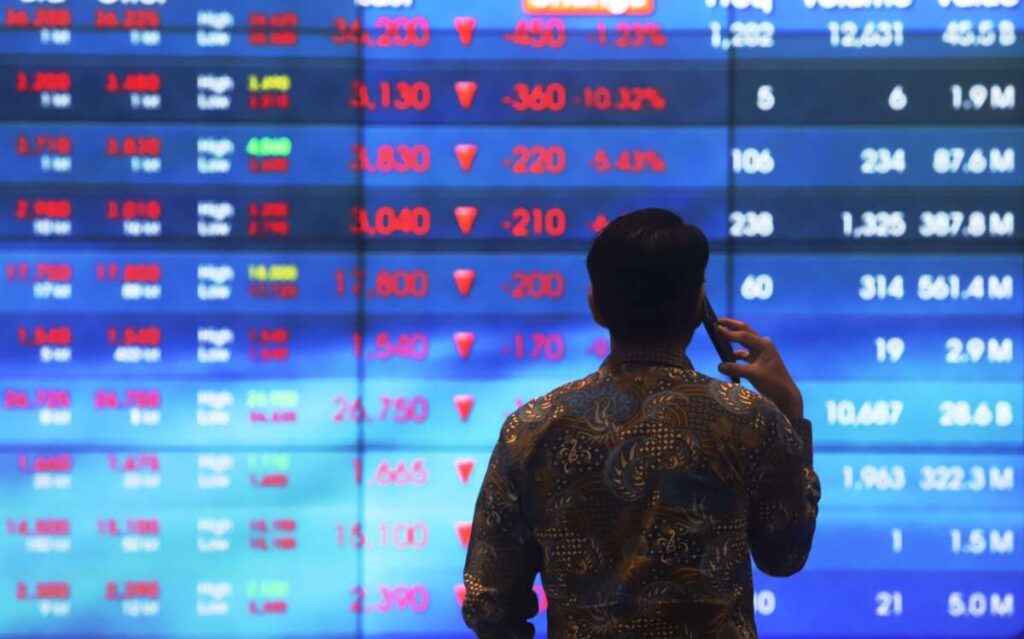
In addition to the pressures in the capital markets, volatility has also occurred in other assets including cryptocurrency and commodity markets. While the price movements of digital assets are different in nature, the correlation of global macro risks makes investors more vigilant about their capital allocation. Investors seeking diversification often monitor macro indicators such as changes in credit ratings to assess the overall risk of a portfolio.
This condition affects short-term capital allocation decisions in global markets, including in commodity markets and other financial assets that tend to fluctuate more when investor confidence drops.
6. Government Promises Action and Transparency
In response to falling investor confidence, the Indonesian government expressed its commitment to respond to market volatility and combat capital market abuses. The president’s directives to market authorities included strengthening responses to market abuses and improving communication with global rating agencies.
This official statement was intended to arrest the market’s decline and show that the fundamentals of the domestic economy remain strong. However, market sentiment still reflects skepticism until policy reforms are visibly implemented.
7. Implications for Long-Term Investors
Long-term investors need to consider the impact of these policies and market volatility in their asset allocation strategies, including in traditional and digital instruments. Macro uncertainty emphasizes the importance of risk management and portfolio diversification more broadly. While market downturns can create value opportunities, investors should approach them with a thorough risk analysis-based approach.
Also Read: 3 Crypto Underrated in February 2026 that Investors are Starting to Look at, Not Just Hype!
Follow us on Google News to stay up to date with the latest crypto and blockchain technology. Check Bitcoin price, USDT to IDR and Nvidia stock price tokenized via Pintu Market.
Enjoy an easy and secure crypto trading experience by downloading the Pintu crypto app via Play Store or App Store now. Also, experience web trading with advanced trading tools such as pro charting, various order types, and portfolio tracker only at Pintu Pro.
*Disclaimer
This content aims to enrich readers’ information. Pintu collects this information from various relevant sources and is not influenced by outside parties. Note that an asset’s past performance does not determine its projected future performance. Crypto trading activities are subject to high risk and volatility, always do your own research and use cold hard cash before investing. All activities of buying and selling Bitcoin and other crypto asset investments are the responsibility of the reader.
Reference
- Bloomberg. Indonesia’s Prabowo Stokes Investor Concerns Amid Land Seizures, Stocks Meltdown. Accessed February 6, 2026.
- Featured Image: FULCRUM
Latest News
© 2026 PT Pintu Kemana Saja. All Rights Reserved.
The trading of crypto assets is carried out by PT Pintu Kemana Saja, a licensed and regulated Digital Financial Asset Trader supervised by the Financial Services Authority (OJK), and a member of PT Central Finansial X (CFX) and PT Kliring Komoditi Indonesia (KKI). Crypto asset trading is a high-risk activity. PT Pintu Kemana Saja do not provide any investment and/or crypto asset product recommendations. Users are responsible for thoroughly understanding all aspects related to crypto asset trading (including associated risks) and the use of the application. All decisions related to crypto asset and/or crypto asset futures contract trading are made independently by the user.