

Indonesia’s oil reserves only 20 days? This is what Indonesia’s fuel stocks mean for energy security
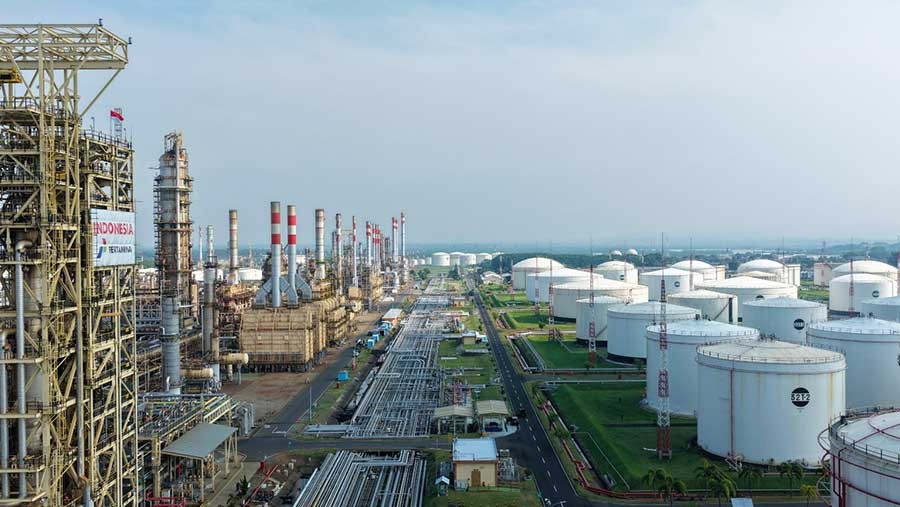
Jakarta, Pintu News – The issue of Indonesia’s oil reserves is back in the spotlight after reports emerged that the national fuel stock is currently only in the range of 20-25 days. This figure looks low when compared to a number of developed countries that have much longer reserves.
Amid rising geopolitical tensions in the Middle East and a surge in global oil prices, these stockpile limitations raise big questions about how strong Indonesia’s energy security will be if global supplies are disrupted.
1. Why are Indonesia’s oil reserves in the spotlight?
Oil reserves or fuel stocks become important when global trade routes are disrupted, especially when supplies from major producing regions such as the Middle East are depressed. Under such conditions, countries that have thicker energy stocks usually have more breathing space to keep domestic distribution stable.
The problem is that Indonesia’s current fuel stocks are said to be only enough for around 20-25 days. This figure does not mean that the government is deliberately holding supplies at low levels, but rather reflects the limited storage infrastructure that Indonesia currently has.
Also Read: How to Buy iShares Core MSCI EAFE ETF (IEFAON) in Indonesia (2025) – Complete Step-by-Step!
2. What does it mean that Indonesia’s fuel stock only lasts 20 days?
The statement that Indonesia’s fuel stock is only 20 days needs to be understood as the operational reserve capability available to meet daily needs. This means that the stock is not a state strategic reserve that is really prepared specifically to face a major crisis, but rather an operational stock that is constantly used and replenished.
Based on data from the Ministry of Energy and Mineral Resources quoted by CNBC Indonesia, national fuel consumption in 2024 reached 82.9 million kiloliters per year. If divided equally, Indonesia’s daily consumption is in the range of 227,136 kiloliters per day, so a 20-25 day stock shows that domestic energy storage space is still limited.
3. Why is Indonesia lagging behind developed countries?
The main difference between Indonesia and many developed countries lies in the type of reserves held. Indonesia currently still relies on the operational reserves of business entities such as Pertamina, while many developed countries have Strategic Petroleum Reserves or strategic oil reserves that are prepared by the state to deal with supply disruptions.
Member countries of the International Energy Agency (IEA) are even required to have reserves equivalent to at least 90 days of net imports. In the European Union, the calculation is stricter as member states are required to prepare stocks equivalent to at least 90 days of daily net imports or 61 days of domestic consumption, whichever is greater.
4. How far does it compare to other countries?
The IEA data quoted in the report shows the wide differences between countries. Japan is recorded to have 206 days’ worth of reserves, South Korea 214 days, France 122 days, Germany 130 days, the UK 120 days, and the Netherlands even reaches 413 days.
This comparison shows that oil reserves in developed countries are not just ordinary distribution stocks. They are positioned as national energy defense tools to anticipate price spikes, geopolitical conflicts or cross-border supply disruptions.
5. What are the Risks for Indonesia?
If the flow of oil imports is disrupted for an extended period, Indonesia risks facing fuel distribution pressure, rising energy costs, and domestic economic disruption. Under normal circumstances, a 20-25 day stock may still be manageable as supplies continue to come in and storage tanks continue to be refilled.
However, in a global crisis, this logic could change. As the world scrambles for oil supplies and international distribution channels choke, thin operational reserves could make Indonesia more vulnerable than countries that already have a strategic stock cushion.
6. What Needs to be Fixed?
Indonesia’s challenge is not only to increase the volume of fuel stocks, but also to expand national storage capacity. As long as storage infrastructure is not strengthened, Indonesia’s ability to build truly strategic energy reserves will remain limited.
The case of China provides a different example. When oil prices were still relatively low in 2025, China increased its commercial and strategic reserves. This strategy gave the country a stronger cushion when oil prices spiked and global supplies were disrupted again.
Also Read: How to Buy MicroStrategy (MSTRON) Shares in Indonesia (2026) – Complete Step-by-Step!
Keep up with the latest information on crypto, blockchain technology, and digital asset markets through Pintu News. You can also enjoy an easy and secure crypto trading experience by downloading the Pintu app through the Google Play Store or App Store, as well as explore advanced trading features through Pintu Pro, which is equipped with various analytical tools and portfolio trackers.
Monitor World Oil Prices Through Crypto Tokens at the Door

Imagine being able to monitor and potentially gain exposure to global oil price movements directly through crypto assets. One way is through Chevron (CVXON) and other US stocks that you can access on the Pintu platform, allowing investors to follow the dynamics of the global energy market from the cryptocurrency ecosystem.
By utilizing blockchain technology, you can view price movements, make transactions easily, and explore portfolio diversification opportunities between global commodities and crypto assets in one app.
*Disclaimer
This content aims to enrich readers’ information. Pintu collects this information from various relevant sources and is not influenced by outside parties. Note that an asset’s past performance does not determine its projected future performance. Crypto trading activities are subject to high risk and volatility, always do your own research and use cold hard cash before investing. All activities of buying andselling Bitcoin and other crypto asset investments are the responsibility of the reader.
Reference
- Elvan Widyatama/CNBC Indonesia. Indonesia’s fuel stock is only 20 days, developed countries have 11,111 days. Accessed today March 10, 2026
- Featured Image: Pertamina
Latest News
© 2026 PT Pintu Kemana Saja. All Rights Reserved.
The trading of crypto assets is carried out by PT Pintu Kemana Saja, a licensed and regulated Digital Financial Asset Trader supervised by the Financial Services Authority (OJK), and a member of PT Central Finansial X (CFX) and PT Kliring Komoditi Indonesia (KKI). Crypto asset trading is a high-risk activity. PT Pintu Kemana Saja do not provide any investment and/or crypto asset product recommendations. Users are responsible for thoroughly understanding all aspects related to crypto asset trading (including associated risks) and the use of the application. All decisions related to crypto asset and/or crypto asset futures contract trading are made independently by the user.