

5 Types of DeFi Wallets for Token Swaps
Jakarta, Pintu News – In the DeFi world, crypto wallets are the main gateway to swap tokens, staking, and accessing various decentralized applications.
Knowing the types of DeFi wallets is very important so that traders and investors can choose the wallet that suits their needs, from fast transactions, long-term storage, to full control over assets.
Here are 5 types of DeFi wallets and their examples!
1. Hot Wallet
A hot wallet is a type of crypto wallet that is always connected to the internet, allowing users to make transactions quickly and conveniently. Typically, these wallets come in the form of a mobile app, desktop, or browser extension.
Because of its instant access, hot wallets are very suitable for active traders or day traders who make daily transactions, DeFi users who regularly swap tokens or access dApps, as well as beginners who want to try the DeFi world without the need to buy hardware wallets.
Some examples of popular hot wallets include Pintu Web3 Wallet, which is available directly within the Pintu app and allows users to swap tokens and connect to various dApps, MetaMask, which can be accessed through browsers and mobile apps, and Trust Wallet, which is known as a versatile crypto wallet app on smartphones.
2. Cold Wallet
Cold wallets are crypto wallets that are not connected to the internet, providing a higher level of security than online wallets. Typically, this type of wallet takes the form of a hardware wallet or a physical medium for storing private keys.
Because they are offline, cold wallets are ideal for long-term investors (HODLers) who want to store assets for years, traders and institutions who store large amounts of crypto, as well as users who really prioritize security and rarely make transactions.
Some examples of popular cold wallets that are widely used include Ledger Nano X or Ledger Nano S Plus, Trezor Model T, and SafePal Hardware Wallet.
Also read: Analysis from CryptoBirb: “Bitcoin Cycle Peak Predicted in 70 Days’ Time!”
3. Custodial Wallet
Custodial wallets are crypto wallets where the private keys are managed by a third party, usually an exchange or service provider platform. By using this type of wallet, users entrust the security as well as full access to their crypto assets to the manager.
This model is perfect for beginners who are not used to managing their own private keys, traders who prioritize ease of access and liquidity, and users who often buy and sell assets directly on exchanges.
Some examples of custodial wallets that are popular among crypto users include Binance Wallet and Coinbase Wallet in custodial mode.
4. Non-custodial Wallet
Non-custodial wallets are crypto wallets where the user has full control over the private keys, so only the wallet owner can access and manage their own assets. This type of wallet is perfect for use in the DeFi world as it allows direct connection to various dApps without intermediaries.
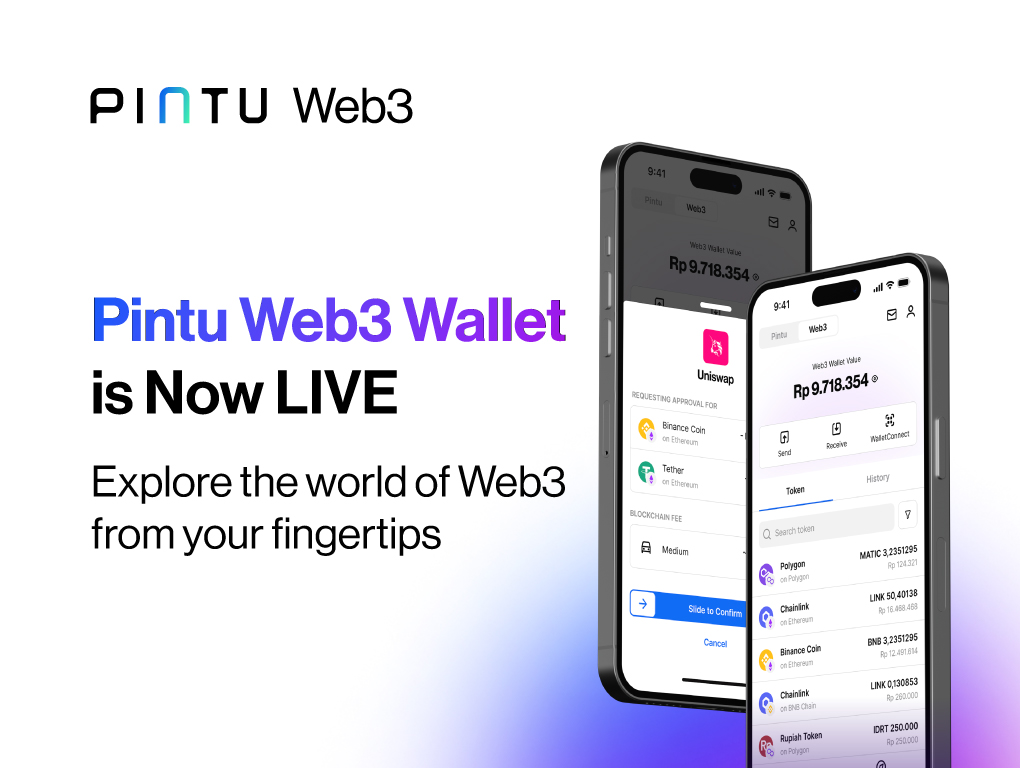
Non-custodial wallets are usually chosen by intermediate to experienced traders who want to have full control over their assets, active DeFi users who frequently interact with platforms such as Uniswap, Aave, or Curve, as well as those who understand the risks and are willing to take responsibility for maintaining their seed phrase.
One example is Pintu Web3 Wallet, a non-custodial wallet with a simple and user-friendly interface that makes crypto asset transactions easy. Through Pintu Web3 Wallet, users can swap various assets directly from the wallet quickly, safely, and efficiently. In fact, this swap feature supports cross-network exchanges without the need to use an external platform, so the entire process can be done in just one application.
Read also: Will Ethereum Reach $10,000?
5. Mobile Wallet
Mobile wallets are crypto wallets that are in the form of applications on smartphones, providing easy access anytime and anywhere. Most mobile wallets are categorized as hot wallets, making them convenient for quick transactions and daily activities.
This type of wallet is suitable for retail traders who require high flexibility, users who often make transactions on the go, and beginners who are looking for a practical way to store and swap tokens.
Some examples of popular mobile wallets that are widely used include Trust Wallet, Argent, and SafePal Mobile Wallet.
Conclusion
With this in mind, each type of wallet has its own advantages and disadvantages. Hot & non-custodial wallets (such as Pintu Web3) are suitable for DeFi and quick swaps, cold wallets for long-term safe keeping, custodial wallets are practical for beginners, while mobile wallets provide maximum convenience for everyday users.
That’s the latest information about crypto. Follow us on Google News to get the latest information about the world of crypto and blockchain technology. Check today‘ s bitcoin price, today‘ s solana price, pepe coin and other crypto asset prices through Pintu Market.
Enjoy an easy and secure crypto trading experience by downloading Pintu crypto app via Google Play Store or App Store now. Also, get a web trading experience with various advanced trading tools such as pro charting, various types of order types, and portfolio tracker only at Pintu Pro.
*Disclaimer
This content aims to enrich readers’ information. Pintu collects this information from various relevant sources and is not influenced by outside parties. Note that an asset’s past performance does not determine its projected future performance. Trading crypto carries high risk and volatility, always do your own research and use cold hard cash before investing. All activities of buying and selling bitcoin and other crypto asset investments are the responsibility of the reader.
Reference
- Money. 8 Best Crypto Wallets of August 2025. Accessed August 18, 2025
- Featured Image: Generated by Ai
Latest News
© 2026 PT Pintu Kemana Saja. All Rights Reserved.
The trading of crypto assets is carried out by PT Pintu Kemana Saja, a licensed and regulated Digital Financial Asset Trader supervised by the Financial Services Authority (OJK), and a member of PT Central Finansial X (CFX) and PT Kliring Komoditi Indonesia (KKI). Crypto asset trading is a high-risk activity. PT Pintu Kemana Saja do not provide any investment and/or crypto asset product recommendations. Users are responsible for thoroughly understanding all aspects related to crypto asset trading (including associated risks) and the use of the application. All decisions related to crypto asset and/or crypto asset futures contract trading are made independently by the user.