

Vitalik Buterin’s Grand Illusion: Why Ethereum Isn’t Destined to Be the Next Google
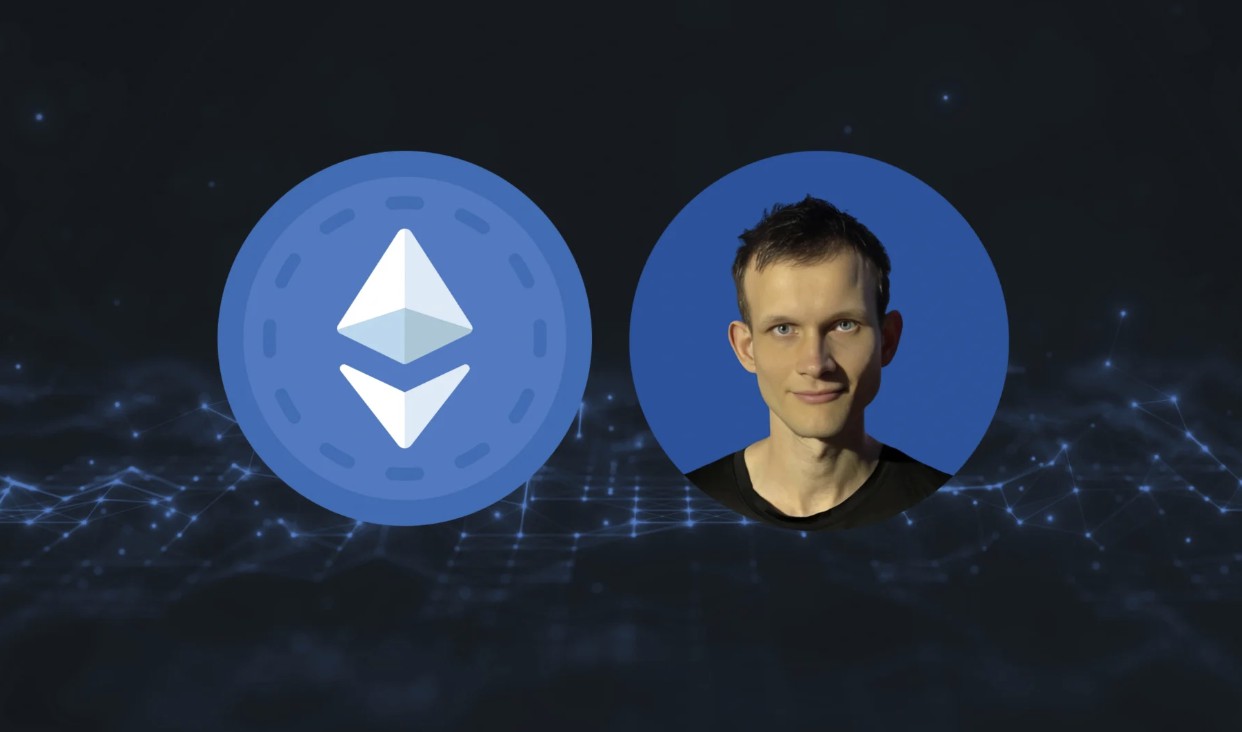
Jakarta, Pintu News – Low-risk DeFi is now at the center of debate in the Ethereum (ETH) community. Many argue that this sector could become the main driver of the network, just as Google Search is the main motor of Google.
However, some experts warn that this view may be overly optimistic, given that Ethereum has to compete with stablecoins and real-world assets.
Low-Risk DeFi – A New Growth Engine for Ethereum?
Previously, Vitalik Buterin suggested that low-risk DeFi protocols like Aave or MakerDAO could potentially become a major source of revenue for Ethereum. He compared this model to the way Google (GOOGLX) makes most of its revenue through Google Search.
Read also: Ethereum Price Falls to $4,100 on September 23, 2025 — Is ETH at Risk of Dropping Below $4,000?
“Importantly, low-risk DeFi often aligns very well with many of the experimental applications that we at Ethereum find interesting,” Vitalik said.
In the context of Ethereum, Vitalik emphasized the importance of secure financial activity to support savings and payments-especially for underserved communities-in order to maintain the cultural identity of the ecosystem.
Vitalik’s views sparked a heated debate. David Hoffman argued that low-risk DeFi does little to create demand for blockspace on Ethereum. Even so, locking up large amounts of ETH in lending protocols like MakerDAO, Aave (AAVE), or Uniswap (UNI) elevates ETH to a kind of “commodity money” in the Ethereum ecosystem.
Some developers see low-risk DeFi as universal, simple, and scalable to billions of users. Stani Kulechov even envisions Aave one day being able to distribute yield to billions of people around the world, making DeFi a basic financial instrument for humanity.
“Low-risk DeFi is the backbone of Ethereum: simple, powerful, and universally beneficial. One day, Aave could deliver results to billions of people around the world,” Stani commented.
Low Revenue, Hard to Justify Valuation
Not everyone agrees with Vitalik. One X user argued that low-risk DeFi alone is not enough to justify Ethereum’s massive valuation, currently around 0.5 trillion dollars.
The trading volume of these protocols only reached about 36 million dollars in September-a figure considered too small to create sustainable cash flow for the network.
Moreover, despite DeFi’s total TVL reaching around 95.2 billion dollars and stablecoin supply of 161.3 billion dollars, those metrics have still not been able to generate sufficient blockspace demand to keep network fees attractive for validators.
“Low-risk DeFi as Ethereum’s ‘Google Search’ is only likely to succeed if it positions ETH as the main monetary asset. However, with the dominance of stablecoins and the strong push to make Ethereum the ‘RWA chain,’ ETH will have to compete with more and more other monetary assets for the position,” wrote an X user.
Other commentators warn that the way Vitalik frames services for the unbanked through low-risk DeFi is inappropriate in practice. They argue that moving the lending market entirely on-chain at Layer-1 degrades the user experience and reduces composability.
Ethereum also struggles to compete with dedicated payment systems like Stripe or Circle, as well as with blockchains like Solana (SOL) that are optimized for low fees thanks to subsidies from high MEVs.
Competition with Stablecoins and RWA
Another view is that Ethereum is competing with stablecoins and RWAs to maintain its role as the ecosystem’s native monetary asset. While RWA can attract users with its yield, the asset is considered incapable of matching the reliability and liquidity of ETH; therefore, ETH continues to excel as an irreplaceable monetary asset.
Some analysts also emphasize the appeal of neutral networks like Ethereum as a custodial layer for centralized assets like USDC or RWA. Storing USDC on Aave via Ethereum is perceived to be less at risk of intervention from Circle than storing it on a centralized corporate chain, thus enhancing Ethereum’s position as a censorship-resistant infrastructure.
While some see the idea of “nationalizing” the core DeFi protocol on Ethereum as a step in the right direction, many experts believe Ethereum is not currently ready to deliver truly low-risk, low-cost, and highly scalable DeFi services. This is still an endgame that goes far beyond the on-chain lending market.
“The enshrined service is the real end goal (one step further than Vitalik said), but it shouldn’t be limited to just loans,” said an expert at X.
That’s the latest information about crypto. Follow us on Google News to get the latest crypto news about crypto projects and blockchain technology. Also, learn crypto from scratch with complete discussion through Pintu Academy and stay up-to-date with the latest crypto market such as bitcoin price today, xrp coin price today, dogecoin and other crypto asset prices through Pintu Market.
Enjoy an easy and secure crypto trading experience by downloading Pintu crypto app via Google Play Store or App Store now. Also, get a web trading experience with various advanced trading tools such as pro charting, various types of order types, and portfolio tracker only at Pintu Pro.
*Disclaimer
This content aims to enrich readers’ information. Pintu collects this information from various relevant sources and is not influenced by outside parties. Note that an asset’s past performance does not determine its projected future performance. Crypto trading activities have high risk and volatility, always do your own research and use cold cash before investing. All activities of buying and selling bitcoin and other crypto asset investments are the responsibility of the reader.
Reference:
- BeInCrypto. Vitalik’s Delusion: Why Ethereum Can’t Become the Next Google. Accessed on September 23, 2025
Latest News
© 2026 PT Pintu Kemana Saja. All Rights Reserved.
The trading of crypto assets is carried out by PT Pintu Kemana Saja, a licensed and regulated Digital Financial Asset Trader supervised by the Financial Services Authority (OJK), and a member of PT Central Finansial X (CFX) and PT Kliring Komoditi Indonesia (KKI). Crypto asset trading is a high-risk activity. PT Pintu Kemana Saja do not provide any investment and/or crypto asset product recommendations. Users are responsible for thoroughly understanding all aspects related to crypto asset trading (including associated risks) and the use of the application. All decisions related to crypto asset and/or crypto asset futures contract trading are made independently by the user.