

Take Profit Explained: How Traders Lock in Gains the Right Way
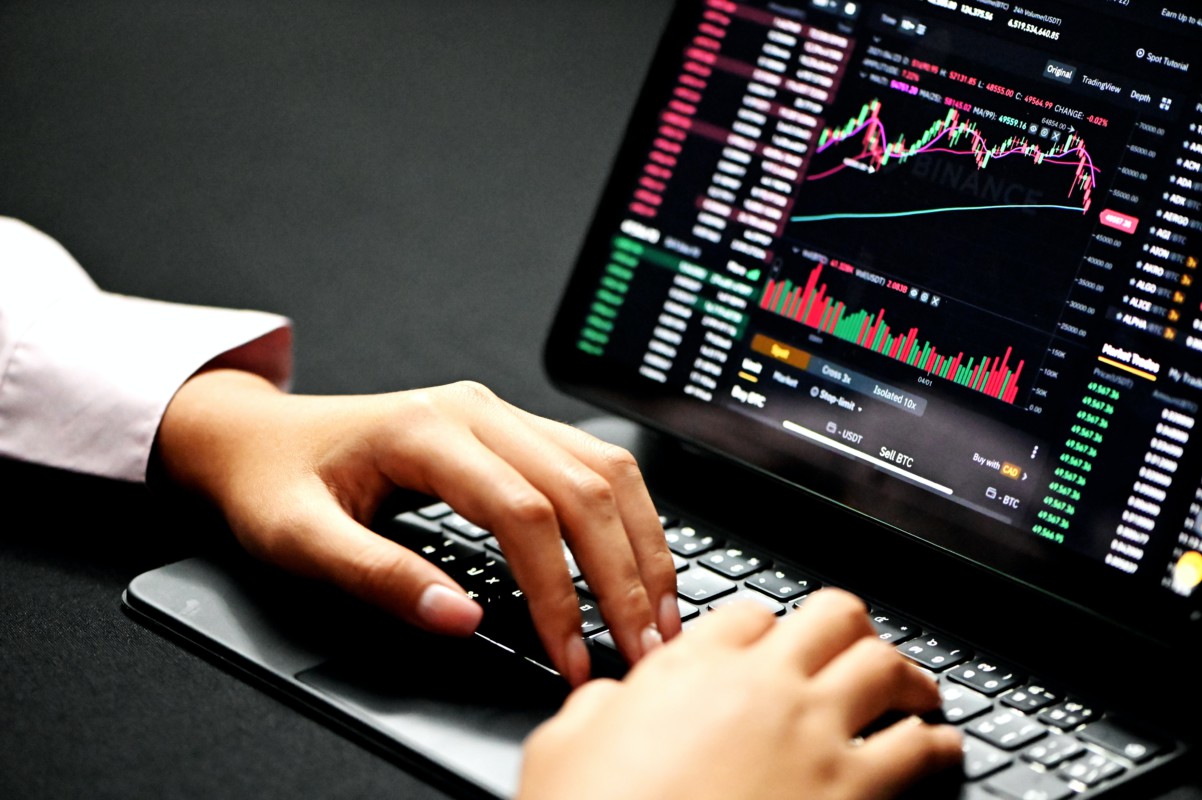
Jakarta, Pintu News – In the world of trading, whether in the forex, crypto or stock markets, determining when to exit a position is a crucial step that often determines the success of an investment strategy.
One of the ways traders use to secure profits is through the Take Profit (TP) feature. However, many beginners do not fully understand how TP works and its importance in risk management.
This article will fully discuss what Take Profit is, how to set it correctly, and provide examples of strategies to implement it so that you can make smarter and more measured trading decisions.
What is Take Profit in Trading?
Take Profit or TP is an order to automatically sell an asset when the price has reached a predetermined profit level. The main purpose of TP is to secure profits before the market reverses, so you don’t lose out on potential profits that are already in sight.
Read also: Web4: Definition, Examples, and Differences with Web3 & Web5
For example, if you buy a stock for $100 and set the TP at $110, then as soon as the price hits $110, the system will automatically execute the sale, locking in your profit. Without the TP order, you might see the price rise to $110, but then fall back to $98 before you have time to manually sell.
Take Profit Function
For traders, the use of TP is especially beneficial in fast-moving and volatile markets. Instead of guessing when is the best time to sell, TP orders remove the element of speculation and ensure you exit the market at the price you have targeted.
Here are the functions or advantages of Take Profit:
- Traders don’t need to constantly monitor market movements throughout the day or hesitate to guess how high (or low) the price of an asset will go. This helps reduce the influence of emotions in decision-making when trading.
- For short-term traders, take-profit (TP) allows for better risk management as they can exit the position once the planned profit target is reached. As such, they don’t have to face the risk of a sudden price drop.
- TP orders can also be placed at levels supported by technical analysis, such as chart patterns or risk management systems.
- Because they are automatic, take-profit orders make it easier to control risk and maintain discipline in your trading strategy.
How to Determine Take Profit in Stocks and Forex
For the use of TP to yield optimal results, traders need to apply it strategically. Here are some important things to consider:
1. Determine the Right Risk to Return Ratio
A commonly used approach is a risk-reward ratio of 1:2. This means that for every $1 of risk taken, the target profit is $2. For example, if a trader’s Stop Loss (SL) is placed $10 below the entry price, then Take Profit (TP) should be set at least $20 above it.
This way, even if half of a trader’s trades are losses, the profits from successful trades can still cover them in the long run.
2. Adjust TP and SL to Market Conditions
The fickle nature of the market demands adjustments to TP and SL levels. In highly volatile market conditions, setting SLs that are too tight may result in positions being closed early just because of small fluctuations before prices move as predicted.
Conversely, in a more stable market, an SL that is too wide could unnecessarily magnify risk. Therefore, it is important to analyze the market trend, volatility level and previous price movements before setting TP and SL.
Read also: When is the Best Time to Buy XRP? Here’s ChatGPT’s Analysis
3. Use Technical Analysis to Position
Avoid setting TP and SL randomly. Use support and resistance levels, moving averages, Fibonacci retracements, and other technical indicators as guides to place TP and SL logically.
For example, if the stock price fails to break the $110 level several times, then placing a TP slightly below that level may be more realistic than targeting a price of $115.
4. Don’t Change SL Unless Absolutely Necessary
A common mistake traders often make is widening their Stop Loss position when the price is moving against them. This can turn a small loss that should be manageable into a big one.
Unless there is a significant change in market conditions, SLs should be maintained. Changing SLs too often can actually increase the overall risk of loss.
5. Combine TP and SL with Trailing Stop
A trailing stop is a type of SL that moves dynamically with the direction of price movement. For example, if the stock price rises from $100 to $110, a trailing stop can raise the SL level from $95 to $105, locking in some of the profit even though the market still has the potential to rise.
Trailing stops are particularly effective when the market is trending strongly as they allow for maximum profits while maintaining protection from downside risks.
Take Profit Example in Crypto
Imagine you buy 1 BTC at $85,000. Here’s an example of a workable profit-taking strategy:
Sell 25% at $102,000 (±20% upside)
You start securing some of your profits when the price reaches your initial profit target or touches an important resistance area on the chart. This helps to cover the initial risk and recover some capital without having to close the entire position.
Sell 50% at $119,000 (±40% upside)
If the momentum starts to slow down, the RSI indicator shows overbought conditions, or the price reaches a major Fibonacci extension level, you can unwind half of the remaining position. At this point, most of the profit has already been realized so the remaining position can be left to run more calmly.
Sell 75% at $136,000 (±60% upside)
When a risk factor such as regulatory news or a sharp change in market sentiment arises, you can secure almost your entire position. This strategy still leaves a small portion to capture further upside potential, while still protecting the majority of profits already earned.
This gradual approach turns vague expectations into a clear and measurable exit strategy. By combining fixed price targets, technical indicators, and market signals, traders can maintain discipline and avoid emotional decisions despite fast-moving prices.
Read also: 4 Cryptos Analyst Ali Martinez Is Watching Closely — What Could Happen Next?
How to Take Profit on the Door
If you are using the Pintu app, then here are the steps to set up Take Profit and Stop Loss on Pintu:
- Open the Doors app.
- Select the “Futures” menu to bring up the trading pairs and leverage you can use.
- Then, choose a trading pair and specify the type of order, price, and amount you want.
- Afterward, enter your desired target price details in the Take Profit & Stop Loss fields, and you can start trading by placing a Long or Short position.
- On the confirmation page, make sure all the information is correct and click “Confirm”.
- Done! The TP/SL feature is now active on the position you set.
FAQ
What is Take Profit in Forex, Crypto and Stock Trading?
Take Profit is an automatic order to close a trading position when the price reaches a certain profit target, helping to secure profits without the need to constantly monitor the market.
What is the Difference between Take Profit and Stop Loss?
Take Profit is used to lock in profits when the price rises according to the target, while Stop Loss is used to limit losses if the price moves against the prediction.
When to Take Profit?
Take Profit should be taken when the price hits the resistance level, reaches the targeted risk-reward ratio, or when technical indicators show a potential reversal.
What is Partial Take Profit?
Take Profit Partial is a strategy of gradually taking partial profits from a trading position, while leaving the rest of the position open for further profit potential.
Follow us on Google News to stay up to date with the latest in crypto and blockchain technology. Check Bitcoin price, usdt to idr and tokenized nvidia stock price through Pintu Market.
Enjoy an easy and secure crypto trading experience by downloading the Pintu crypto app via Play Store or App Store now. Also, experience web trading with advanced trading tools such as pro charting, various order types, and portfolio tracker only at Pintu Pro.
*Disclaimer
This content aims to enrich readers’ information. Pintu collects this information from various relevant sources and is not influenced by outside parties. Note that an asset’s past performance does not determine its projected future performance. Crypto trading activities are subject to high risk and volatility, always do your own research and use cold hard cash before investing. All activities of buying and selling Bitcoin and other crypto asset investments are the responsibility of the reader.
Reference:
- CFI. A Practical Guide to Take Profit and Stop Loss Orders For UAE traders. Accessed on January 26, 2026
- Changelly. How to Take Profits in Crypto: Strategies, Timing, and Tools. Accessed on January 26, 2026
- IG. What are take-profit and stop-loss orders? How do they work? Accessed on January 26, 2026
- Investopedia. Take-Profit Order (TP): How to Maximize Profits in Trading. Accessed on January 26, 2026
Latest News
© 2026 PT Pintu Kemana Saja. All Rights Reserved.
The trading of crypto assets is carried out by PT Pintu Kemana Saja, a licensed and regulated Digital Financial Asset Trader supervised by the Financial Services Authority (OJK), and a member of PT Central Finansial X (CFX) and PT Kliring Komoditi Indonesia (KKI). Crypto asset trading is a high-risk activity. PT Pintu Kemana Saja do not provide any investment and/or crypto asset product recommendations. Users are responsible for thoroughly understanding all aspects related to crypto asset trading (including associated risks) and the use of the application. All decisions related to crypto asset and/or crypto asset futures contract trading are made independently by the user.