

What’s the Earning Potential of a Single Mining Rig? Find Out Here
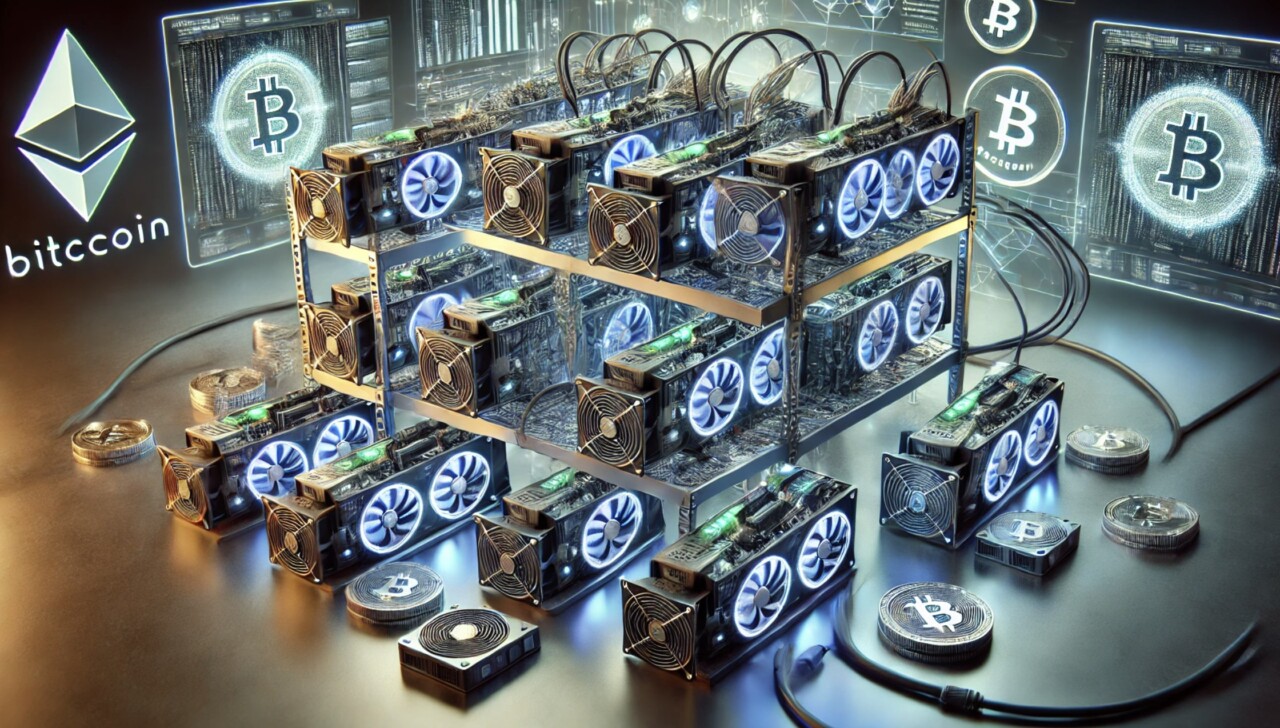
Jakarta, Pintu News – Mining cryptocurrency is still one of the popular ways to earn passive income from the digital world. However, for beginners, the question often arises: “How much does 1 mining rig earn?” To answer that thoroughly, let’s go from the basics to the estimated actual profit from a mining rig.
What is a Mining Rig and its Components?
A mining rig is a computer system specifically designed to mine cryptocurrency, such as Bitcoin (BTC), Ethereum (ETH), or other coins. The system works by verifying transactions on the blockchain and earning cryptocurrency in return.
Read also: Who Currently Holds the Largest Stake in NVIDIA?
Main Components of Mining Rig:
The following are the components of a mining rig:
- GPU (Graphics Processing Unit): The main component to perform the mining process. There can be several GPUs in one rig.
- Motherboard: Must support multiple GPU slots.
- Processor (CPU): Not very important in mining, but still needed.
- RAM: Usually 4GB-8GB is enough.
- Storage (SSD/HDD): Required for the operating system.
- PSU (Power Supply Unit): Must be powerful enough to support all GPUs and other components.
- Rig Frame: To place and keep all components ventilated.
- Cooling System: To keep the temperature stable.
Then, how much does 1 mining rig cost and how many VGAs does 1 mining rig have? Usually, 1 mining rig has between 6 to 12 VGAs (GPUs), depending on the capacity of the motherboard and PSU. The cost of 1 mining rig can range from IDR 30 million to IDR 100 million, depending on the type of GPU and other components used.
How Much Crypto Does 1 Mining Rig Produce?
The earnings from a rig largely depend on the type of coin being mined, the rig configuration, and the network conditions.
Quoting the Bitbo report:
- In the case of Bitcoin (using ASICs instead of GPU rigs), the revenue per TH/s unit is calculated in proportion to the total network hashrate.
- Furthermore, bitbo mentioned that mining profitability continues to decline as the total hashrate of the network increases, so the revenue per unit of power is further squeezed.
For GPU-based rigs (e.g. Ethereum Classic, Ravencoin, and others) – as an example from the Cointelegraph page:
- A 6 GPU rig (e.g. 6× RTX 3080 Ti) if used to mine Ravencoin (RVN) can earn around $170 per month, according to WhatToMine calculations referenced by Cointelegraph.
- However, this is gross revenue (not deducting electricity, operating costs, and other factors).
So “how much crypto” can range from a fraction of a coin per day to dozens of coins per month, depending on the scale of the rig and the type of coin.
Factors Affecting Mining Results
Some of the main factors that affect the outcome of a mining rig are:
- GPU type and number – The more and more powerful the GPU, the higher the hash rate.
- Cryptocurrency prices – When prices go up, profits also go up.
- Network difficulty (mining difficulty) – The higher the difficulty, the lower the chance of getting rewards.
- Electricity cost – An important factor as mining is very power-intensive.
- Cooling quality – Overheating can reduce GPU performance.
- Online time (uptime) – The more often the rig goes down, the smaller the mining yield.
Then, how many watts does 1 mining rig need? On average, 1 mining rig requires around 1000-1500 watts of power, depending on the number of GPUs and their efficiency.
Read also: Altcoin Momentum Builds as Market Quietly Starts to Shift
Estimated Profit and Revenue from 1 Mining Rig
The following is an example of an estimate – it should be considered as an illustration, not an absolute prediction:
Rig Example (6 mid-range GPUs)
- GPU: 6 × RTX 3070
- Compound hash rate: e.g. 360 MH/s
- Power consumption: ~1,200 watts full rig
- Hours of operation: 24 hours/day
Gross Revenue
For example, a rig mining a coin that produces 0.08 coins per day (this is just a hypothetical example), in a month (~30 days) → 2.4 coins. If the coins are sold for Rp3,000,000 per coin → gross revenue ≈ Rp7,200,000.
Electricity Cost
Consumption: 1.2 kW × 24 hours × 30 days = 864 kWh
Electricity tariff (example): Rp1,500 per kWh
Electricity cost = 864 × 1,500 = Rp1,296,000
Other Fees and Pool Commissions
- Pool commission (e.g. 1.5%): of gross revenue
- Hardware maintenance, cooling, downtime, etc.
Net Profit
Net income = Gross income – (Electricity + commission + maintenance fee)
≈ Rp7,200,000 – (Rp1,296,000 + other costs)
≈ ~Rp5 million less, depending on other variables.
Worth noting: rigs may take 6-12 months or more to recoup (pay for the cost of 1 mining rig).
According to a Cointelegraph article, a six GPU rig can earn ±$170 per month (gross) when used for coins like Ravencoin, if all components are designed efficiently. In terms of Bitbo, the profitability of Bitcoin mining (using ASICs) shows smaller and smaller margins due to increased difficulty and high competition.
Comparison Between Mining Solo and Mining Pool

One of the most important decisions that miners – both beginners and professionals – have to make is whether to mine solo or join a mining pool. Both methods have their own advantages and disadvantages, depending on your device capacity, goals, and risk tolerance.
What is Solo Mining?
Mining solo means that you mine independently, without joining a group of other miners. You use the entire hash rate of your own rig to try to complete blocks and get full rewards from the network.
Advantages of Solo Mining:
- All rewards are your own: If you successfully find a block, you will get 100% of the reward (e.g. 6.25 BTC for Bitcoin or 2.5 ETH for Ethereum), with no pool fee deducted.
- No pool fees: You don’t have to pay a commission (usually 1%-2%) to a third party.
- More independent: Not dependent on server pools, you are in complete control of the mining process.
Lack of Solo Mining:
- Very difficult for beginners: Need a large hash rate to compete with other miners globally.
- Unstable income: It can go weeks, even months, without finding a block.
- It requires a strong infrastructure: High uptime, stable network, and intensive maintenance to keep the rig running optimally.
What is a Mining Pool?
Mining pool is a collection of several miners who combine their computational power (hash rate) to mine together. If the pool successfully completes a block, the reward is divided equally according to each participant’s hash rate contribution.
Advantages of Mining Pool:
- More stable income: You will receive small but regular rewards, almost every day.
- Suitable for beginners: No need to have a big rig, even 1 mining rig can earn consistently.
- Efficient operational costs: Many pools provide complete monitoring software, dashboards, and statistics.
Mining Pool Shortage:
- Rewards are shared: You only get a small share based on your contribution.
- There is a pool fee: An average of 1%-2% of your total rewards will be taken as commission.
- Dependence on the pool: If the server pool goes down, mining results may be compromised.
Overall, the answer to the question “How much does 1 mining rig make?” is: around IDR2 million-IDR4 million per month under stable market conditions, assuming the rig has around 6 GPUs and operates without interruption.
However, make sure to take into account all aspects such as electricity costs, crypto prices, and device maintenance to keep mining profitable.
That’s the latest information about crypto. Follow us on Google News to get the latest crypto news about crypto projects and blockchain technology. Also, learn crypto from scratch with complete discussion through Pintu Academy and stay up-to-date with the latest crypto market such as bitcoin price today, xrp coin price today, dogecoin and other crypto asset prices through Pintu Market.
Enjoy an easy and secure crypto trading experience by downloading Pintu crypto app via Google Play Store or App Store now. Also, get a web trading experience with various advanced trading tools such as pro charting, various types of order types, and portfolio tracker only at Pintu Pro.
*Disclaimer
This content aims to enrich readers’ information. Pintu collects this information from various relevant sources and is not influenced by outside parties. Note that an asset’s past performance does not determine its projected future performance. Trading crypto carries high risk and volatility, always do your own research and use cold hard cash before investing. All activities of buying and selling bitcoin and other crypto asset investments are the responsibility of the reader.
Reference:
- Bitbo. Is Bitcoin Mining Profitable or Worth it in 2025? Accessed on October 14, 2025
- Cointelegraph. How much does it cost to build a crypto mining rig at home? Accessed on October 14, 2025
Latest News
© 2026 PT Pintu Kemana Saja. All Rights Reserved.
The trading of crypto assets is carried out by PT Pintu Kemana Saja, a licensed and regulated Digital Financial Asset Trader supervised by the Financial Services Authority (OJK), and a member of PT Central Finansial X (CFX) and PT Kliring Komoditi Indonesia (KKI). Crypto asset trading is a high-risk activity. PT Pintu Kemana Saja do not provide any investment and/or crypto asset product recommendations. Users are responsible for thoroughly understanding all aspects related to crypto asset trading (including associated risks) and the use of the application. All decisions related to crypto asset and/or crypto asset futures contract trading are made independently by the user.