World Oil Prices Plummet! G7 prepares unexpected move to release 400 million barrels, market panics
Jakarta, Pintu News – The surge in global crude oil prices to $120 per barrel has triggered panic in the international energy market. G7 countries are now considering the extraordinary step of releasing up to 400 million barrels from their strategic reserves.
This plan was the largest intervention in history, in response to a serious threat in the Strait of Hormuz that threatened 20% of the world’s oil supply. This situation caused great turmoil in the financial markets, triggering price volatility and huge losses for market participants.
G7 prepares historic move, oil prices plummet
G7 governments, including the United States, are discussing the release of strategic oil reserves in a coordinated manner through the International Energy Agency (IEA). Japan, as the owner of the world’s third-largest oil reserves, initially denied having made a final decision, but admitted that it continues to monitor the development of the situation.
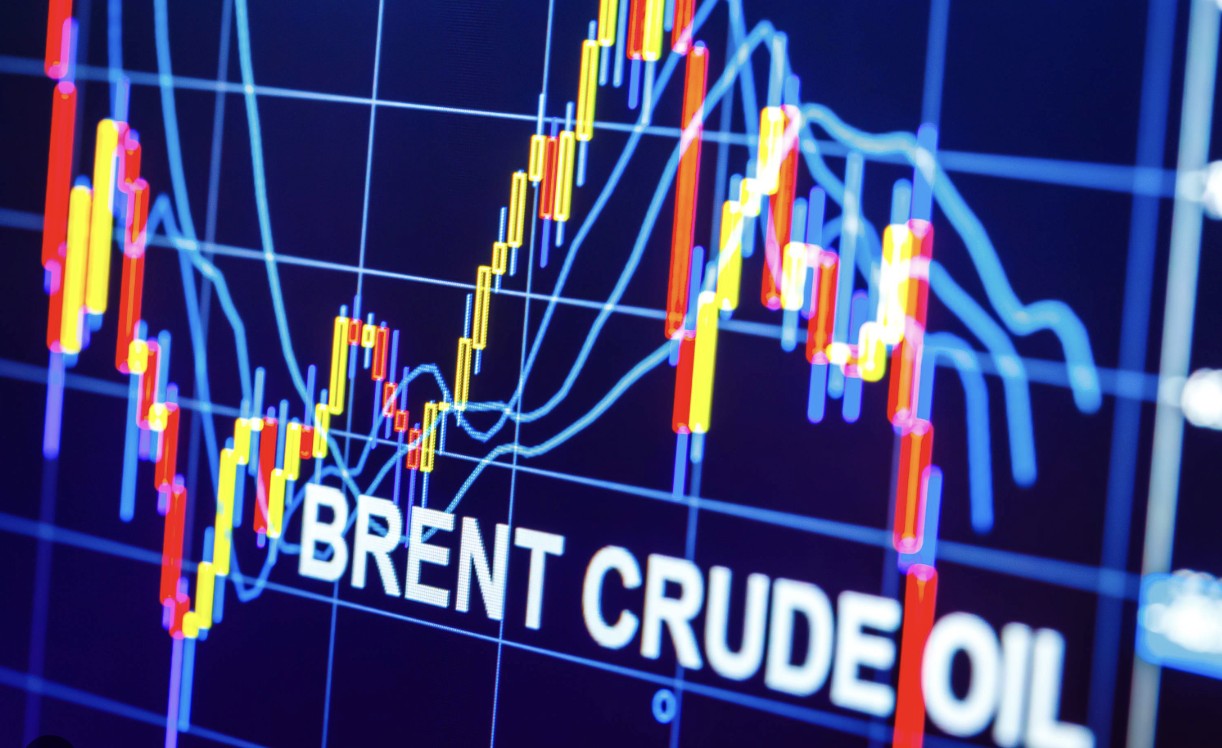
The planned release of these reserves immediately sent oil prices plummeting, from a peak of $120 to around $103,682 per barrel, a drop of almost 17% in a short period of time. This price drop is proof of how sensitive the market is to the strategic policies of major countries.
The G7 move was triggered by fears of a potential blockade of the Strait of Hormuz, a vital passage through which a fifth of the world’s oil supplies pass. Japan is the most vulnerable country, as more than 90% of its crude oil imports pass through the strait.
In addition, the United States has also seen domestic oil prices surge to more than $55 per barrel in the past three months, almost double the previous price. If prices remain high, US economic growth is expected to contract by 0.5%, equivalent to a loss of $160 billion in economic output.
Also Read: 3 Reasons Robert Kiyosaki Believes Bitcoin Can Explode to IDR 4.22 Billion in 2026!
The Hormuz Crisis and Its Impact on Global Markets
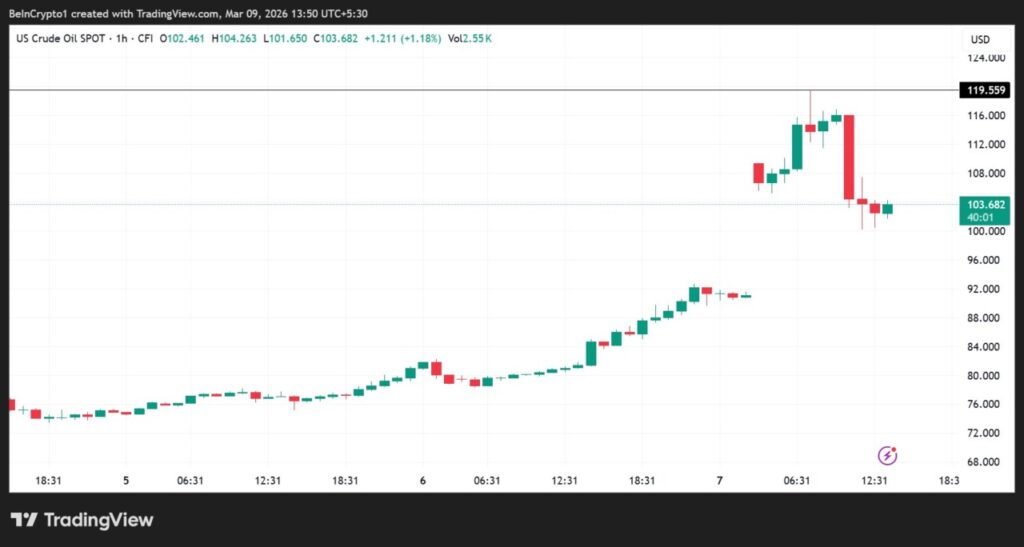
Iran’s threat to the Strait of Hormuz has raised fears of global oil supply disruptions. Countries such as Iraq and Kuwait have even begun to shut down some of their production, and the United Arab Emirates is expected to follow suit.
HFI Research warns that the release of oil reserves by the G7 is likely to be only a temporary solution. If tanker shipping disruptions continue until the end of March, it is estimated that around 450 million barrels of oil will be lost from global inventories, slightly more than the amount of reserves to be released.
Oil price volatility also has a direct impact on traders and investors in the financial markets. One crypto wallet identified by Arkham, owned by a well-known meme coin trader, lost up to $3.5 million on a $12 million crude oil short position. Conversely, another trader managed to make a profit of over $1 million by opening a 5x leveraged short position just before the news of the G7 oil reserve release broke. This phenomenon shows how quickly market sentiment can change due to geopolitical policies and government intervention.
Fed Policy Debate and Long-Term Effects
Amidst the oil price turmoil, there is a heated debate about the direction of US monetary policy. Renowned investor Anthony Pompliano asserts that the surge in oil prices should not be a reason for the Fed to hold off on cutting interest rates. According to him, the US economy is currently in a state of structural deflation, so a single commodity like oil is not strong enough to change the overall direction of monetary policy.
Pompliano even encouraged the Fed to remain aggressive in cutting interest rates in the first half of this year. Meanwhile, former President Donald Trump stated that oil prices will soon drop dramatically if the Iranian nuclear threat can be resolved. He called the current increase in oil prices a “small price to pay” for global stability.
Historically, strategic oil reserves have usually only been released during major crises such as the first Gulf War in 1990 and the 2011 Fukushima disaster. However, the scale of the release this time suggests that the threat in the Strait of Hormuz is seen as equivalent to these major crises.
Conclusion
The G7’s move to release large amounts of strategic oil reserves is a strong signal that the world is facing a serious threat to global energy stability. However, analysts warn that this solution is only temporary, as the released reserves will have to be replenished in the future, potentially putting more pressure on oil prices. The success of this intervention largely depends on how quickly shipping lanes in the Strait of Hormuz can return to normal. If not, the world could face a deeper and more prolonged energy crisis.
Also Read: Altcoin Season Index: An Important Indicator to Know the Altseason
Follow us on Google News to stay up to date with the latest in crypto and blockchain technology. Check Bitcoin price, usdt to idr and tokenized nvidia stock price via Pintu Market.
As a safe crypto app, Pintu provides a crypto trading experience to access crypto gold investment easily and conveniently. You can also see today ‘ s gold jewelry price and today ‘ s gold bullion price to support your investment activities and portfolio diversification as well as learn crypto through Pintu Academy.
Download the Pintu crypto app via Play Store or App Store now. Enjoy the web trading experience with various advanced trading tools such as pro charting, various types of order types, and portfolio tracker only at Pintu Pro.
Monitor World Oil Prices Through Crypto Tokens

Imagine being able to monitor and potentially gain exposure to global oil price movements directly through crypto assets. One way is through Chevron (CVXON) and other US stocks that you can access on the Pintu platform, allowing investors to follow the dynamics of the global energy market from the cryptocurrency ecosystem.
By utilizing blockchain technology, you can view price movements, make transactions easily, and explore portfolio diversification opportunities between global commodities and crypto assets in one app.
*Disclaimer
This content aims to enrich readers’ information. Pintu collects this information from various relevant sources and is not influenced by outside parties. Note that an asset’s past performance does not determine its projected future performance. Crypto trading activities are subject to high risk and volatility, always do your own research and use cold hard cash before investing. All activities of buying and selling Bitcoin and other crypto asset investments are the responsibility of the reader.
Reference
- BeInCrypto. G7 Considers Oil Reserve Release Amid Hormuz Crisis. Accessed on March 13, 2026
Latest News
© 2026 PT Pintu Kemana Saja. All Rights Reserved.
The trading of crypto assets is carried out by PT Pintu Kemana Saja, a licensed and regulated Digital Financial Asset Trader supervised by the Financial Services Authority (OJK), and a member of PT Central Finansial X (CFX) and PT Kliring Komoditi Indonesia (KKI). Crypto asset trading is a high-risk activity. PT Pintu Kemana Saja do not provide any investment and/or crypto asset product recommendations. Users are responsible for thoroughly understanding all aspects related to crypto asset trading (including associated risks) and the use of the application. All decisions related to crypto asset and/or crypto asset futures contract trading are made independently by the user.